
The Petal-Bearer's Scary Romance
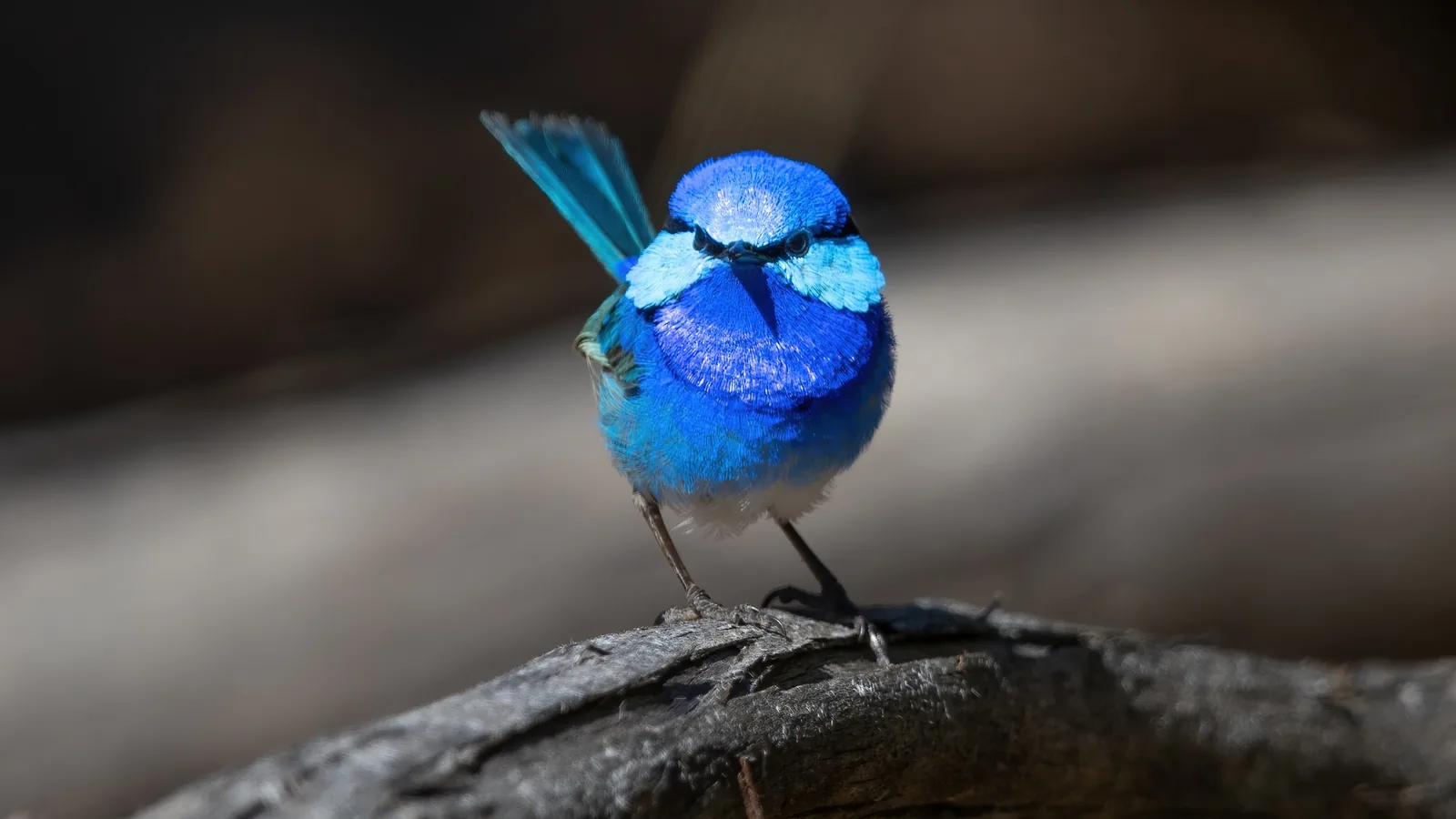
Picture a tiny bird, electric blue, hopping through the dry scrub of inland Australia. If you wake up somewhere near Perth or out in the mallee country of Victoria, this is one of the voices in the bushes at first light. The Splendid Fairywren is one of the most colorful birds on the continent, and one of the oddest courtiers around. It woos with flowers, and it does its boldest singing the moment something wants to eat it.
A Soft Tail and a Splendid Name
Its scientific name is Malurus splendens, and the two halves pull in opposite directions. Splendens is Latin for shining, which the breeding male earns. His blue is iridescent, and it bounces back ultraviolet light our eyes cannot register. Malurus is the deflating half. It comes from the Greek malos, meaning soft or delicate, and oura, meaning tail. So one word gasps at the dazzle; the other names the bird for its soft tail and ignores the blue. Watch one cock that tail up over its back, though, and you will agree the tail earned its billing.
He Says It With Flowers

Most birds court with a song or a flash of plumage. The male Splendid Fairywren brings a gift. In breeding season he plucks petals, usually pink or purple ones that pop against his blue, and carries them to a female. Sometimes on his own patch. Just as often he carries them across the boundary into a neighbor’s territory, because these wrens keep a famously loose arrangement. Pairs stay together socially, yet both partners regularly mate outside the bond, and more than a third of chicks turn out to be fathered by a male from somewhere else. Helpers, usually grown sons from the previous year, stay on to feed the next brood regardless. It is a complicated little society, run partly on flowers.
Singing Into the Scream
Here is the part that sounds invented. In 2010, behavioral ecologists Emma Greig and Stephen Pruett-Jones published a study showing that male Splendid Fairywrens sing a special display song, called Type II song, right after they hear a predator call. The usual trigger is the butcherbird, a songbird that hunts smaller birds. A sensible animal goes quiet when a predator calls. The male wren does the opposite and belts out his courtship number. Females, the researchers found, grew more attentive after a predator call, and tended to respond more strongly to the male’s song when danger had just sounded than when he sang alone. They named it vocal “hitchhiking.” The male lets the predator seize the audience’s attention, then makes his move. It is the old horror-movie-date trick: the fear does the work, and the singer takes the credit. His everyday voice is a fast gushing reel, harsher and louder than other fairywrens, with a thin “tsit” for alarm.
So the Splendid Fairywren is a tiny blue romantic who gives flowers and sings into danger. If that rushing little reel ever stirs you awake, you are hearing one of the boldest performers in the bush, a bird that turned fear itself into a love song.
Sources:
- Wikipedia: Splendid fairywren
- Behavioral Ecology (Greig & Pruett-Jones, 2010): Danger may enhance communication: predator calls alert females to male displays
- ScienceDaily: Australian birds attract mates with ‘scary movie effect’
- Birds of the World (Cornell Lab): Splendid Fairywren (Malurus splendens)
- Xeno-canto: Splendid Fairywren call recordings