
The Diamond in the Riverbank
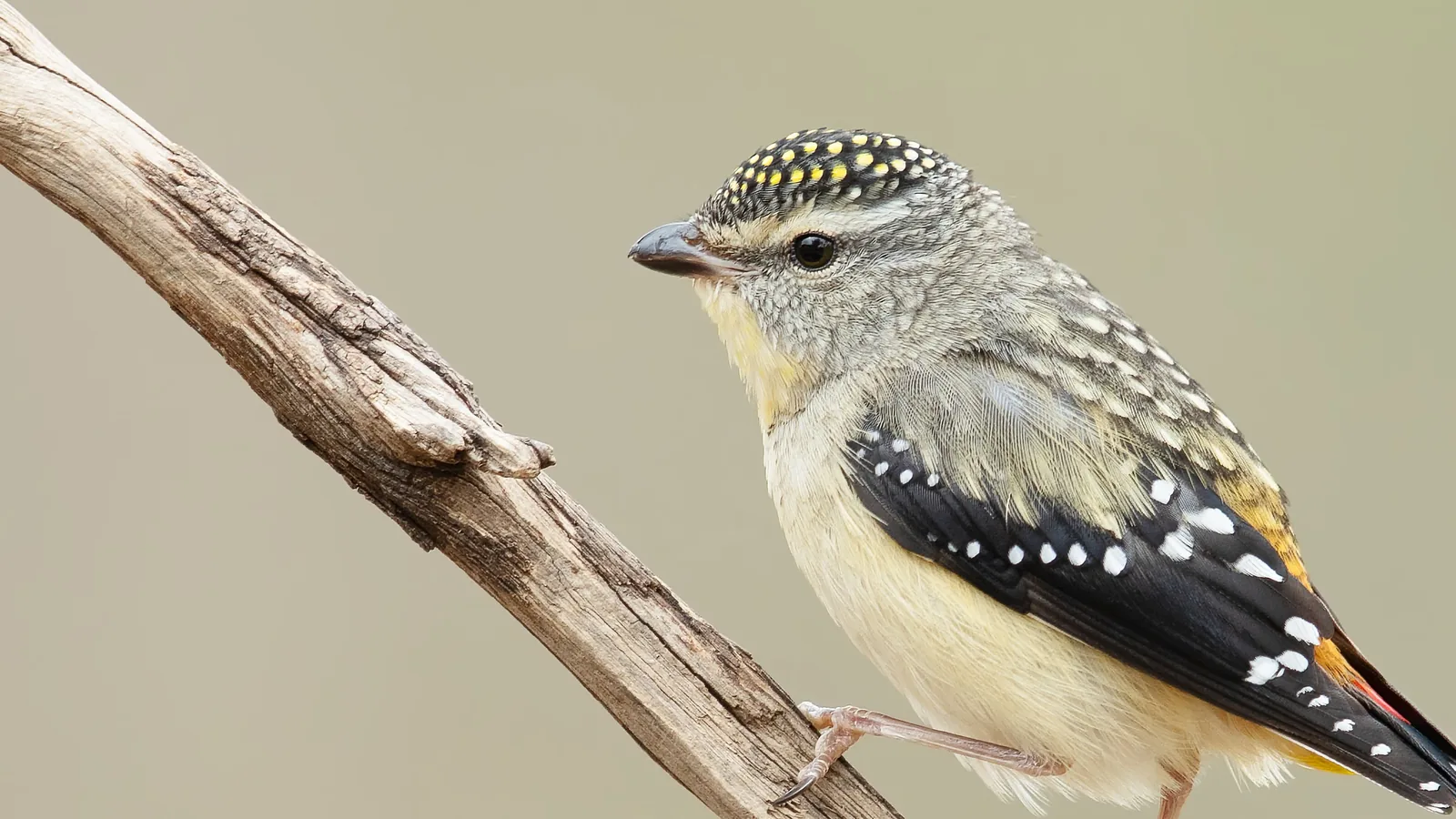
Somewhere in a tall eucalypt in southeastern Australia, a bird the size of your thumb is making a noise far too big for its body. If you wake up near bushland around Melbourne or Sydney, that soft, repeated whistle drifting down from the canopy is likely this one. The Spotted Pardalote weighs about six grams and rarely sits still long enough to admire. Which is a shame, because it is dusted all over with pale spots like flecks of paint, and it does something almost no other songbird does: it nests underground.
Spotted, Twice Over
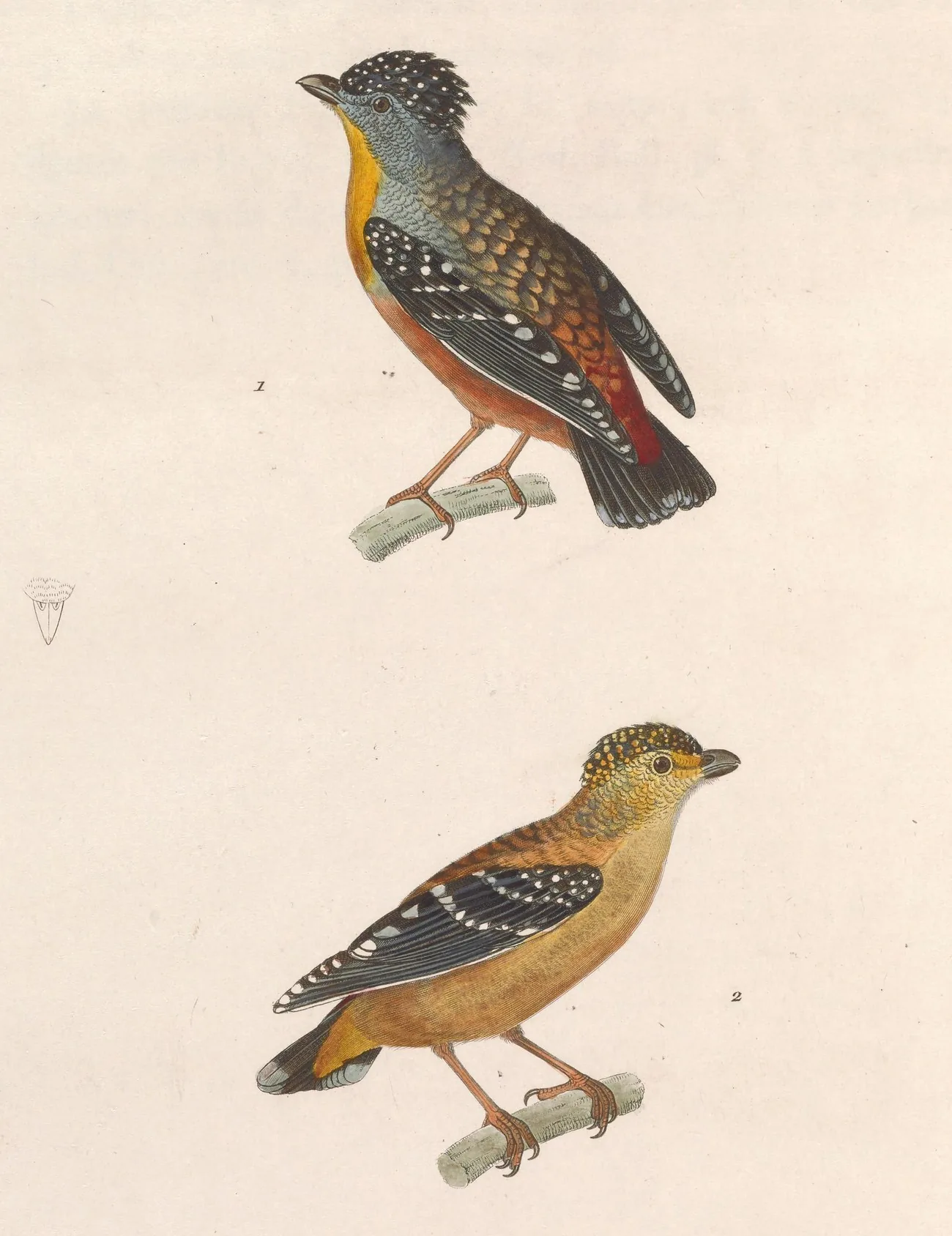
Early European settlers called it the diamondbird, on account of the white spots scattered across its dark wings and crown like a handful of tiny jewels. The science doubles down on exactly the same idea. Its scientific name is Pardalotus punctatus, and it means, more or less, “spotted spotted.” Pardalotus comes from the Greek pardalotos, “spotted like a leopard.” Punctatus is simply Latin for “dotted.” Two languages, one very consistent observation. Closely related pardalotes that nest high up in tree hollows picked up the nickname “tree diamonds,” which left this ground-loving cousin to be known, fittingly, as a “ground diamond.”
A Tunnel Fit for a Thimble
Here is the part that surprises even seasoned birdwatchers. When it is time to breed, a pair of pardalotes picks a creek bank, a road cutting, or a pile of dug-up soil in someone’s garden, and starts to dig. Together they excavate a tunnel up to a metre and a half long, barely wider than a finger, ending in a small chamber lined with shredded bark. The clever detail is in the engineering: the nesting chamber sits higher than the entrance, so that rain running into the tunnel drains back out instead of flooding the eggs. A few even nest in stranger spots, rolled-up carpets and the housing of garage roller-doors. A six-gram bird, digging a tunnel that can reach fifteen times its own length.
Sleep-May-Be, All Morning
The call is where the pardalote earns its other, far less flattering name. Through the breeding season it repeats a soft, ringing phrase that early listeners wrote down as “sleep-may-be,” over and over, from first light onward. In some districts that was enough to get it called the “headache bird,” which seems harsh for something so small. Listen closely and there is a hidden trick in it: the contact call between a pair is really two calls, an opening note and an almost instant answer, so the sound can appear to come from two directions at once. Stand under a tree full of them while they feed and you might catch a different sound entirely, a faint popping, as the birds crunch the sugary lerp casings off the eucalyptus leaves.
For such a tiny, easily overlooked bird, the Spotted Pardalote keeps remarkable secrets, in the canopy and in the ground. You can pass one a hundred times and never know it was there. But once you have learned its small, hopeful whistle, a whole eucalyptus forest sounds a good deal more inhabited.
Sources:
- Wikipedia: Spotted pardalote
- Wikipedia: Pardalote (genus etymology)
- Birds in Backyards (BirdLife Australia): Spotted Pardalote
- Tanya Loos: Spotting a Spotted Pardalote
- The Conversation: In praise of pardalotes (John Woinarski)
- Wild Ambience: Spotted Pardalote calls & sounds
- Land for Wildlife: Lerps, one of nature’s sweet offerings