_(30571971863).jpg)
The Understory's Master Forger
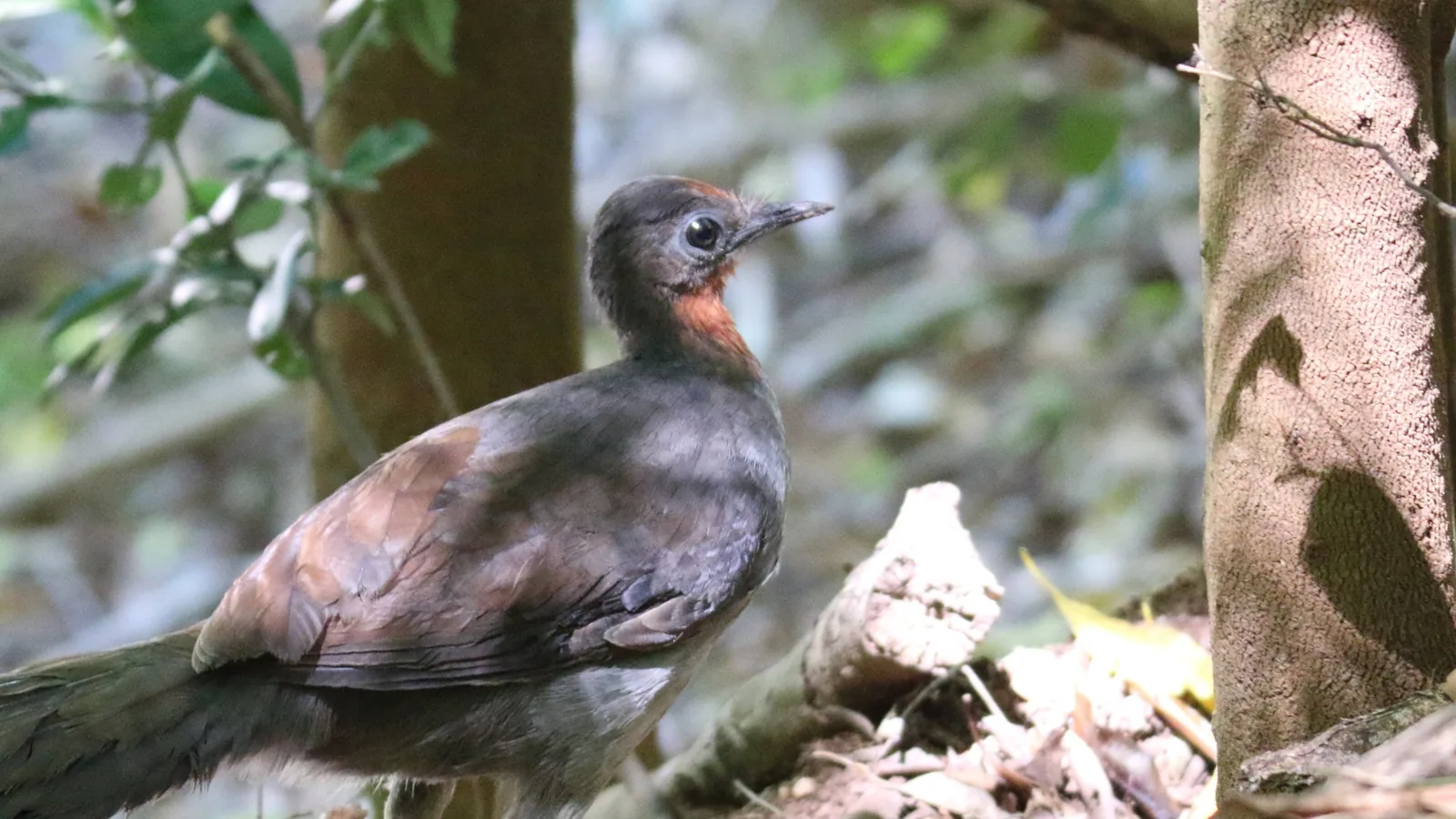
Wake up in the wet forests between Melbourne and Brisbane and the dawn can play tricks on you. A kookaburra laughs. A whipbird cracks. Then, faintly, a sound like a camera shutter. Go looking and you may find one bird, grey and the size of a hen, on the leaf litter with its beak open. The Superb Lyrebird has been running the whole soundtrack alone.
The Lyre That Never Was
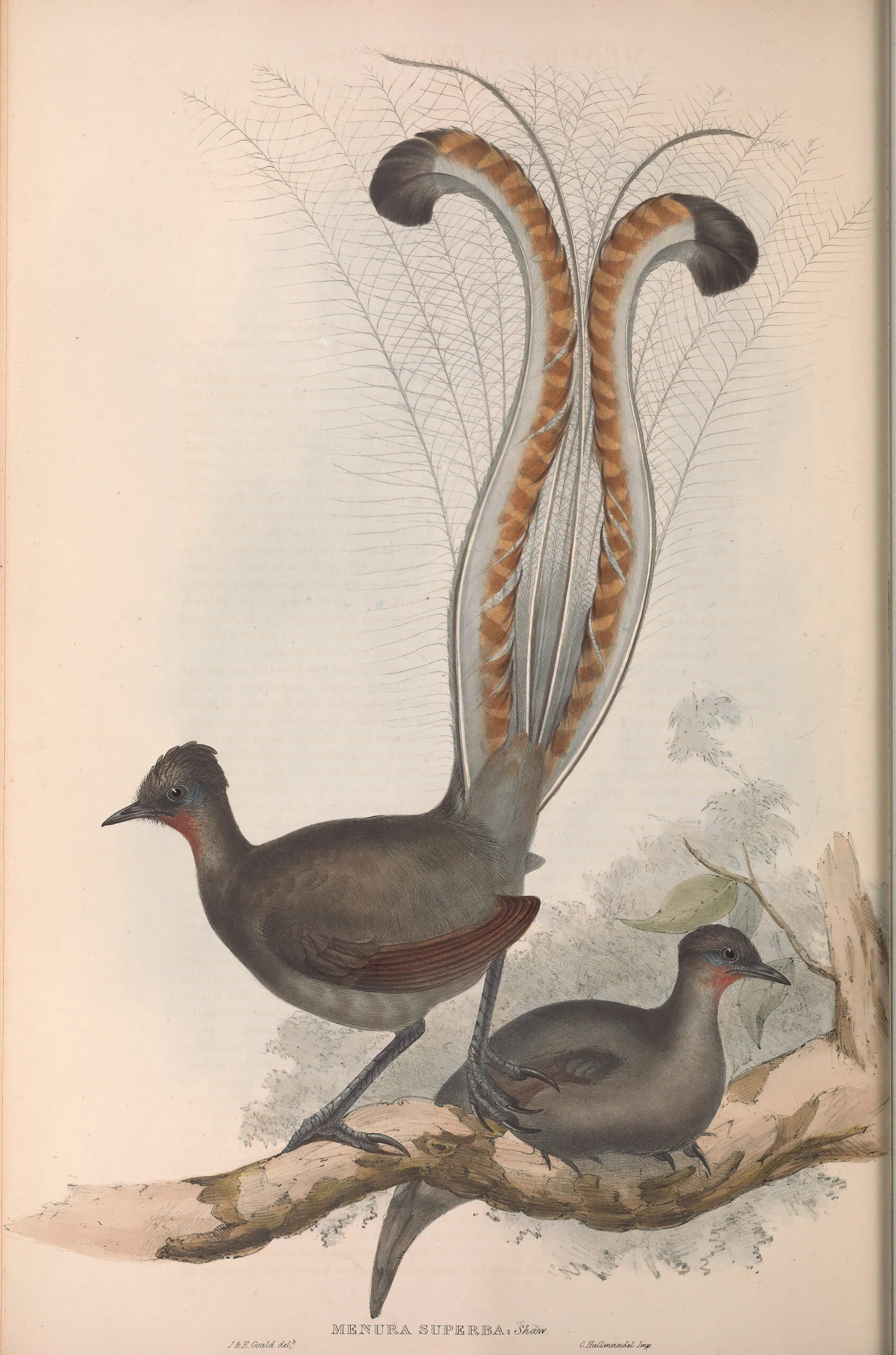
Its scientific name is Menura novaehollandiae. The second half means “of New Holland,” the old European name for Australia. The first half is stranger, from the Greek for “moon” and “tail,” after the row of pale crescents, like little moons, set into the male’s long tail feathers. The “lyre” itself is a mistake that stuck. One of the first specimens shipped to London was posed by a museum taxidermist who had never seen the living bird. He splayed the tail upright, like the frame of a Greek lyre, assuming the male wore it so. John Gould, the great Victorian bird painter, copied the pose, and the name followed. A courting male does the reverse: he throws the tail forward over his back until it drapes like a silver veil, hiding his head completely.
A Voice Stolen from the Whole Forest
Here is the strange part. In the wild, most of a male’s song, by some counts around 80 percent, is imitation. He copies other birds, and sometimes other animals, threading twenty or more voices into long medleys. The famous clip of a lyrebird doing chainsaws and camera shutters, narrated by David Attenborough (the veteran British naturalist), is real, but it flatters the wild bird: most of those human-sound mimics were captives raised around people. In the forest the lyrebird copies its neighbors well enough to fool the neighbors themselves. Females mimic too, mostly when driving intruders from a nest. And the repertoire passes down like a dialect: birds in Sherbrooke Forest near Melbourne still imitate the pilotbird, gone from those hills for more than a decade.
The Flock That Isn’t There
The mimicry is not only for show. In 2021, a team led by behavioral ecologist Anastasia Dalziell described a use for it that reads like a con. When a female visits a displaying male and then tries to leave without mating, and again during the pair’s unusually long mating, the male conjures the sound of a whole panicked flock, many small birds alarm-calling at once, as though a predator had appeared. He even mimics the whir of their wingbeats. A playback experiment showed the fake fooled real birds. The researchers suspect he is manufacturing a moment of danger, a reason for the female to stay close instead of stepping into the open.
So the Superb Lyrebird is not one voice at all. It is a walking recording of its own forest, faithful enough to deceive the very birds it copies, and cunning enough to bend that gift to its own ends. If an impossible dawn chorus ever wakes you, all at once and none of it quite right, picture one grey bird on the ground, working.
Sources:
- Wikipedia: Superb lyrebird
- Current Biology (Dalziell et al., 2021): Male lyrebirds create a complex acoustic illusion of a mobbing flock during courtship and copulation
- The Conversation (Maisey & Bennett, 2020): New research shows lyrebirds move more litter and soil than any other digging animal
- Birds of the World (Cornell Lab): Superb Lyrebird (Menura novaehollandiae)
- Xeno-canto: Superb Lyrebird call recordings