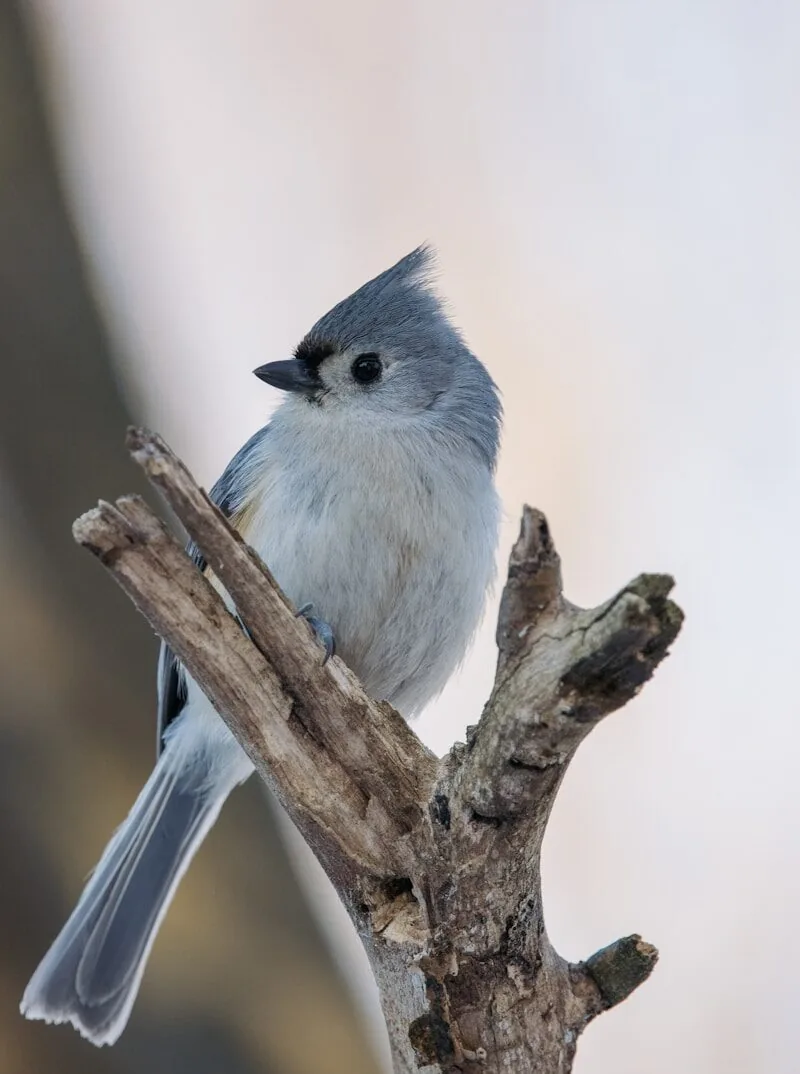
If you wake up to a rhythmic “peter-peter-peter” whistle on your morning alarm in a high-rise in Tokyo or a flat in Berlin, you are hearing a voice from a world you likely won’t find in your local park. The Tufted Titmouse (Baeolophus bicolor) is a regional powerhouse of the eastern North American canopy, a bird whose perky grey crest and wide-eyed aesthetic mask an audacity that borders on the criminal. While it may look like a “mouse” scurrying along a branch, its identity is a fascinating blend of linguistic accidents and high-stakes biological heists.
Linguistic Ghosts and the Identity Crisis
The bird’s name is a classic linguistic “car wreck.” In Old English, tit meant small, and mase meant bird. As mase fell out of fashion, it was corrupted into “mouse”—likely because the bird’s grey plumage and restless, hopping movements reminded early observers of a rodent.
Scientifically, however, its name follows a more visual logic: Baeolophus combines the Greek baiós (small) and lophos (crest), while bicolor refers to its distinct two-toned appearance. This descriptive trend spans cultures; the Navajo name Haʼaʼaahdę́ę́ʼ diltʼóshii identifies it as the “crested one from the east,” while in Germany, it is known as the Grauhäubchenmeise, or “grey-crested tit.”
Kleptotrichy: The Great Hair Heist
Don’t let the “cute” factor fool you; this bird is a professional thief. The titmouse engages in a behavior recently coined by scientists as kleptotrichy—literally, “hair-stealing.” Unlike other birds that scavenge for shed fur on the forest floor, the titmouse lands directly on living, breathing mammals to harvest nesting material.
Researchers have documented these birds plucking hair from the backs of sleeping raccoons, foxes, and even the heads of unsuspecting humans. While the fur provides excellent insulation, scientists suspect the scent of a predator in the nest lining may also serve as a chemical deterrent, warding off snakes and other intruders. It is a risky, high-reward strategy that proves this bird is far tougher than its four-inch frame suggests.
The Legend of the Lying Bird
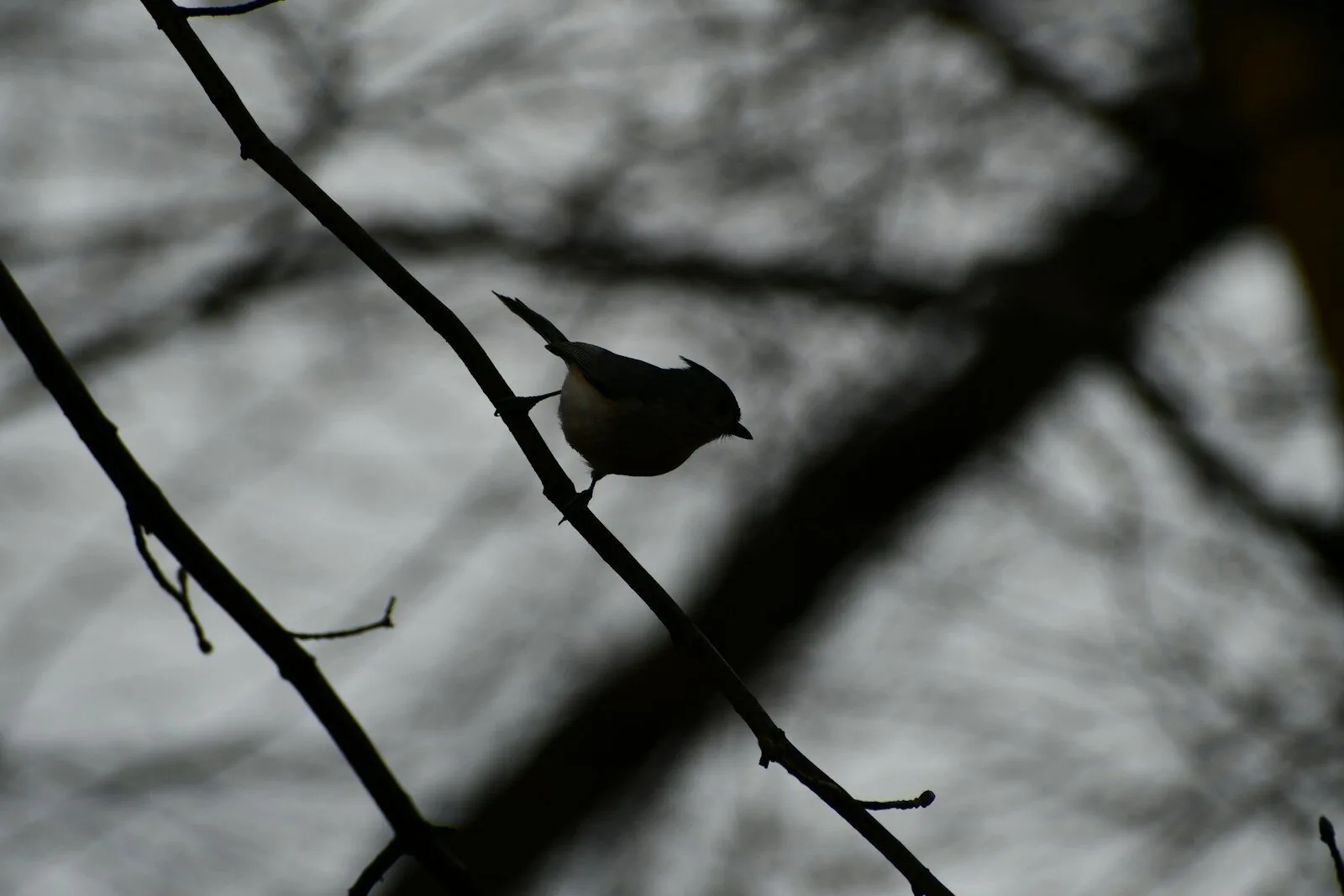
While modern birdwatchers find the titmouse’s song cheerful, Cherokee oral tradition paints a darker picture. In the myth of Spearfinger—a stone-skinned ogress who terrorized the people—the titmouse was portrayed as an arrogant messenger who led warriors astray.
Legend says the bird lied about the monster’s vulnerable spot, while the chickadee pointed to the truth. In retribution, the warriors cut the titmouse’s tongue, a myth that explains the bird’s short, blunt tongue and earned it the title of “the bird that lies.”
The Tufted Titmouse is a survivalist masquerading as a common backyard visitor. Whether acting as a self-appointed forest sentry or a daring “kleptotricher,” it remains a bold neighbor that braves the winter with a persistent whistle and a personality that is anything but small. It reminds us that even the most delicate creatures can harbor a spirit of surprising defiance.
Sources:
- Living on Earth: Tufted Titmouse
- Henry Pollock (Research): Plucking hair from live mammals by a Tufted Titmouse
- University of Illinois News: Researchers describe ‘kleptotrichy,’ birds plucking hair from live mammals
- Wikipedia: Tufted titmouse
- BirdNote: Tufted Titmouse: What’s in a Name?
- Native Languages of the Americas: Native American Titmouse Mythology
- Smoky Mountain News: The Honest Little Bird