_Tiritiri_Matangi_2.jpg)
The Parson With Two Voices
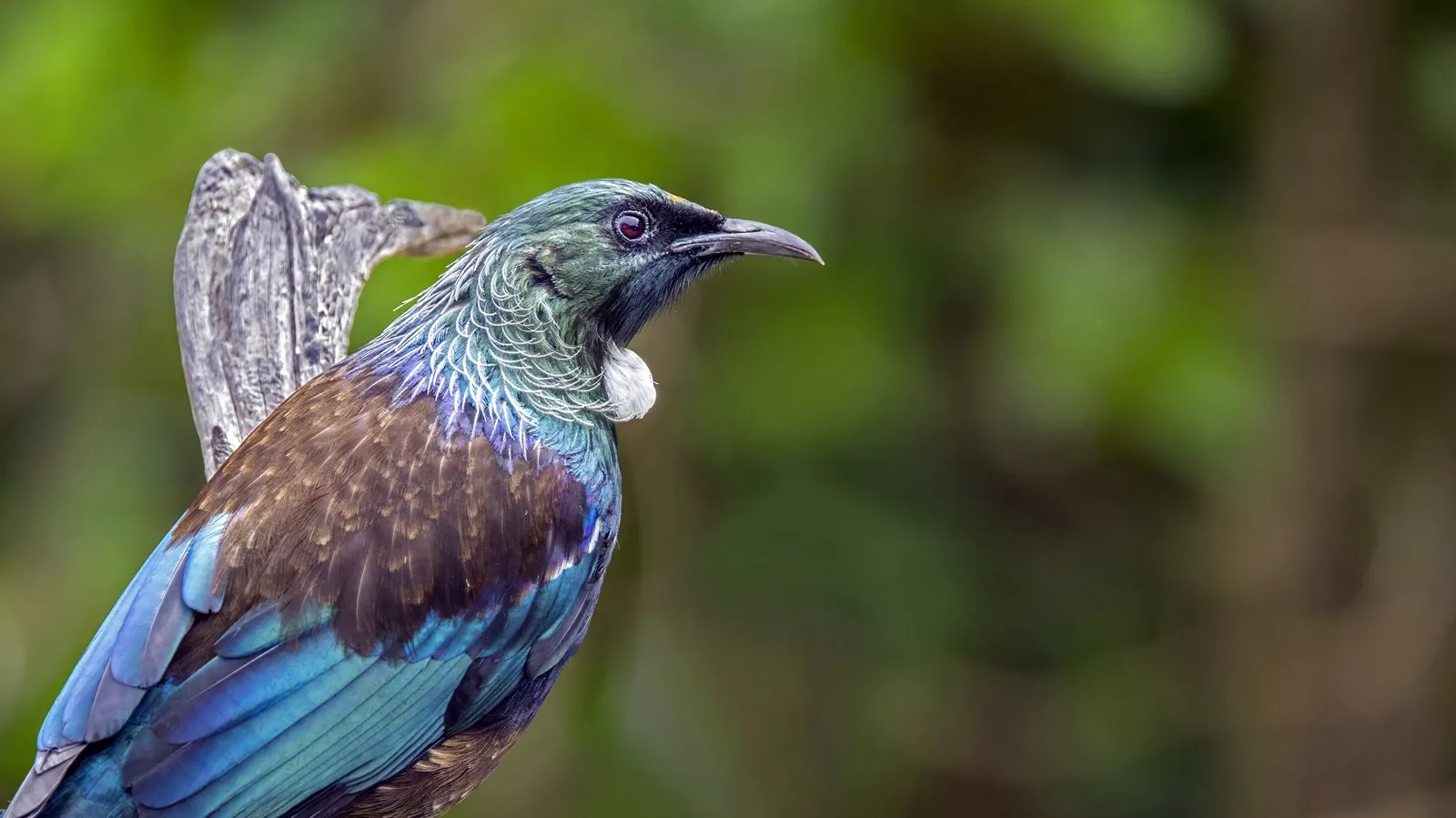
If you wake up in New Zealand, the tūī is the bird turning your morning into something between a wind chime and a creaky gate. It is glossy blue-black with an odd white pom-pom at its throat, and it can sound like four birds arguing inside one body. Early British settlers thought that white tuft looked like a clergyman’s collar, and named it the parson bird. They had no idea how right that would turn out to be, because this is a bird you can teach to give a speech.
The Bird in the Parson’s Collar
Up close, the tūī is not blue-black at all. The plumage throws iridescent green and bronze, with a lacy collar of white filaments behind the neck and two white tufts at the throat. Māori call those tufts poi, after the swinging flax balls used in dance. Settlers also called it the mocking bird and, oddly, the poe bee-eater. Its scientific name, Prosthemadera novaeseelandiae, roughly means “appendage-necked bird of New Zealand,” a dry way of pointing at the same tuft everyone else named it for. Māori had at least fourteen names for it, tūī and kōkō the most common.
Drunk on Flowers, Singing in Two Voices
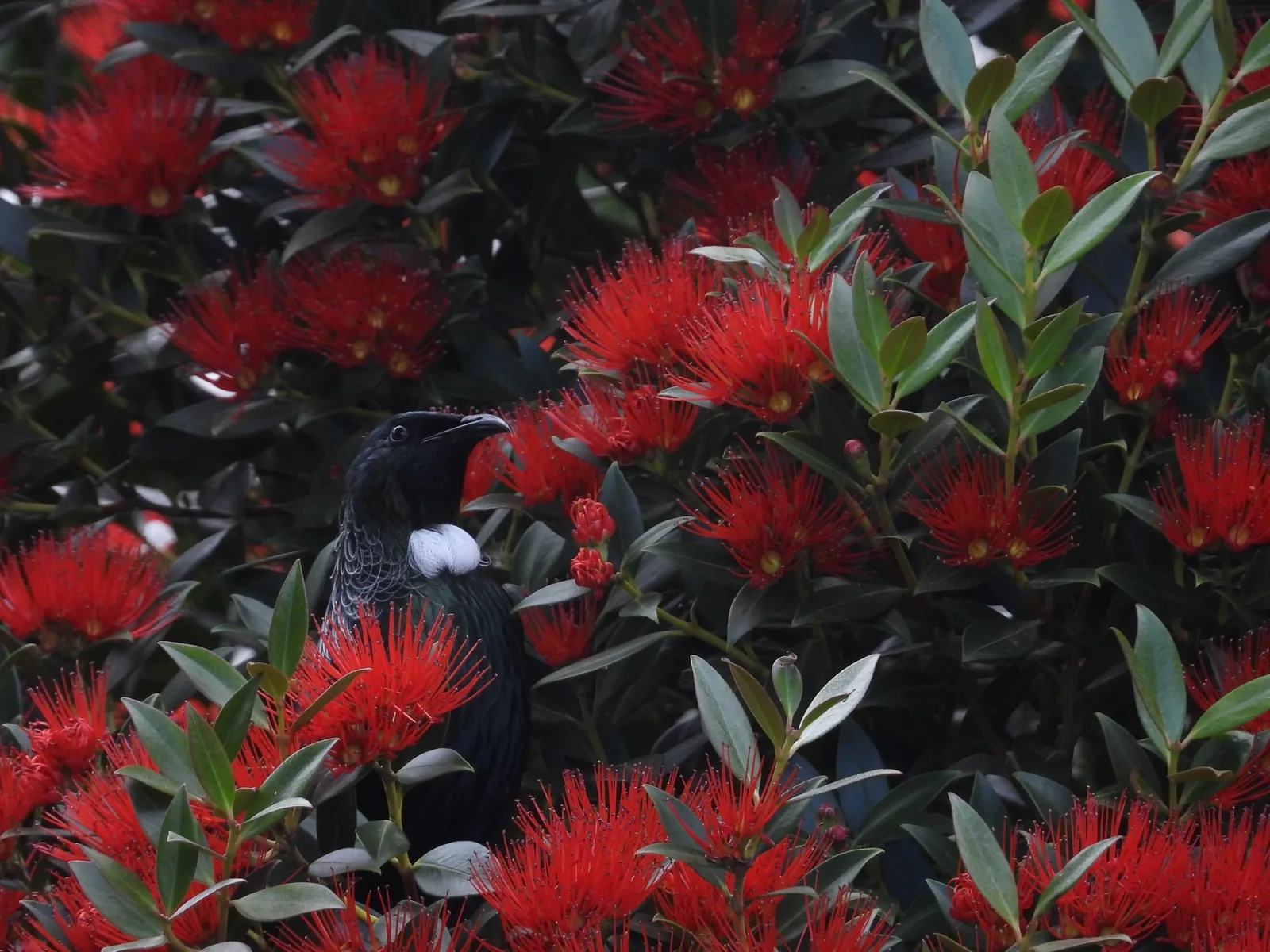
The tūī runs on sugar. It is one of New Zealand’s most important pollinators, pushing its brush-tipped tongue into kōwhai and the scarlet blooms of the rātā tree, carrying pollen from flower to flower as it feeds. Its favourite, New Zealand flax, has nectar that sometimes ferments, and a tūī that drinks too much can end up flying in loops like a bird that has had a few.
But the strangest thing about a tūī is the sound itself. Like other songbirds it has a syrinx, a voice box set where the windpipe forks in two, and a tūī can work each branch on its own. So it can sing two notes at once and harmonize with itself, moving from bell-like chimes to clicks and wheezing creaks that sound less like a bird than a small broken orchestra. Some of the song you never hear at all: watch closely and a tūī seems to huff and hunch in silence between phrases, reaching notes that climb clean above the range of human hearing.
The Birds Who Gave Speeches
Here is where the parson nickname stops being a joke. Tūī are gifted mimics, far closer to a parrot than a sparrow, and Māori kept tame ones and trained them to talk. Not a few words. Whole speeches. Walter Buller, who chronicled New Zealand’s birds in the 1880s, recorded a tame tūī taught a long, formal welcome to recite to visitors arriving at a marae. Others were taught karakia, the prayers and incantations of formal occasions, so that a glossy black bird in a clergyman’s collar might greet you before any person did.
Most of us will never hear it. But the next time those impossible double-notes pull you out of sleep, remember that people once trusted this bird with their most formal words, spoken from a throat built for two voices at once.
Sources:
- Wikipedia: Tūī
- New Zealand Birds Online (Robertson, 2013): Tūī (Prosthemadera novaeseelandiae)
- Department of Conservation: Tūī
- Predator Free NZ Trust: Feisty, melodious tūī is a welcome garden visitor
- New Zealand Birds: The Tui, with a welcome speech taught to a tame bird (after Buller, 1888)