
From New Stranger to Welcome Guest
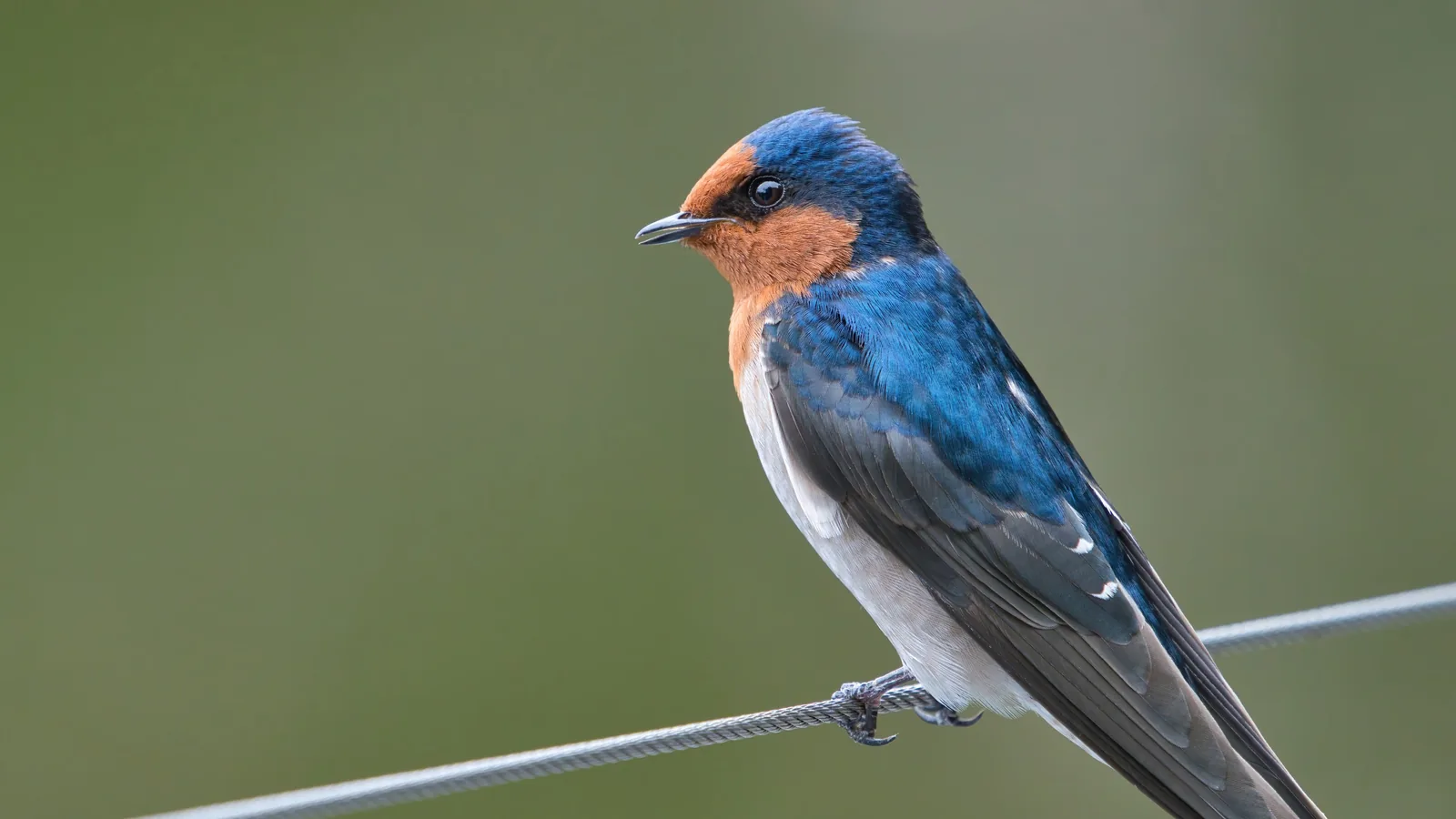
Picture a small bird with a rusty-orange throat and a deeply forked tail, cutting figure-eights over a paddock. If you live almost anywhere in Australia or New Zealand, it has probably already built a mud cup on your house. Victorian science filed this bird under a name that means “new stranger.” Everyone who actually met it called it welcome.
It Welcomed Itself to New Zealand
The welcome swallow took its name literally. It is Australian by origin, and for most of recorded history New Zealand did not have it at all. Then, sometime in the 1950s, that changed. Birds migrating to and from Tasmania were apparently blown across the Tasman Sea by storms, and rather than dying off as lost vagrants, they stayed. The first confirmed nest turned up at Awanui, in the far north of New Zealand, in 1958. Within a decade they had spread across nearly the whole country.
Today it breeds almost everywhere in New Zealand except wet, mountainous Fiordland, and Māori gave the newcomer its own name: warou. A bird that colonised a country on the strength of a few storm-blown wrong turns. Not bad for a stranger.
A Stranger, by Name
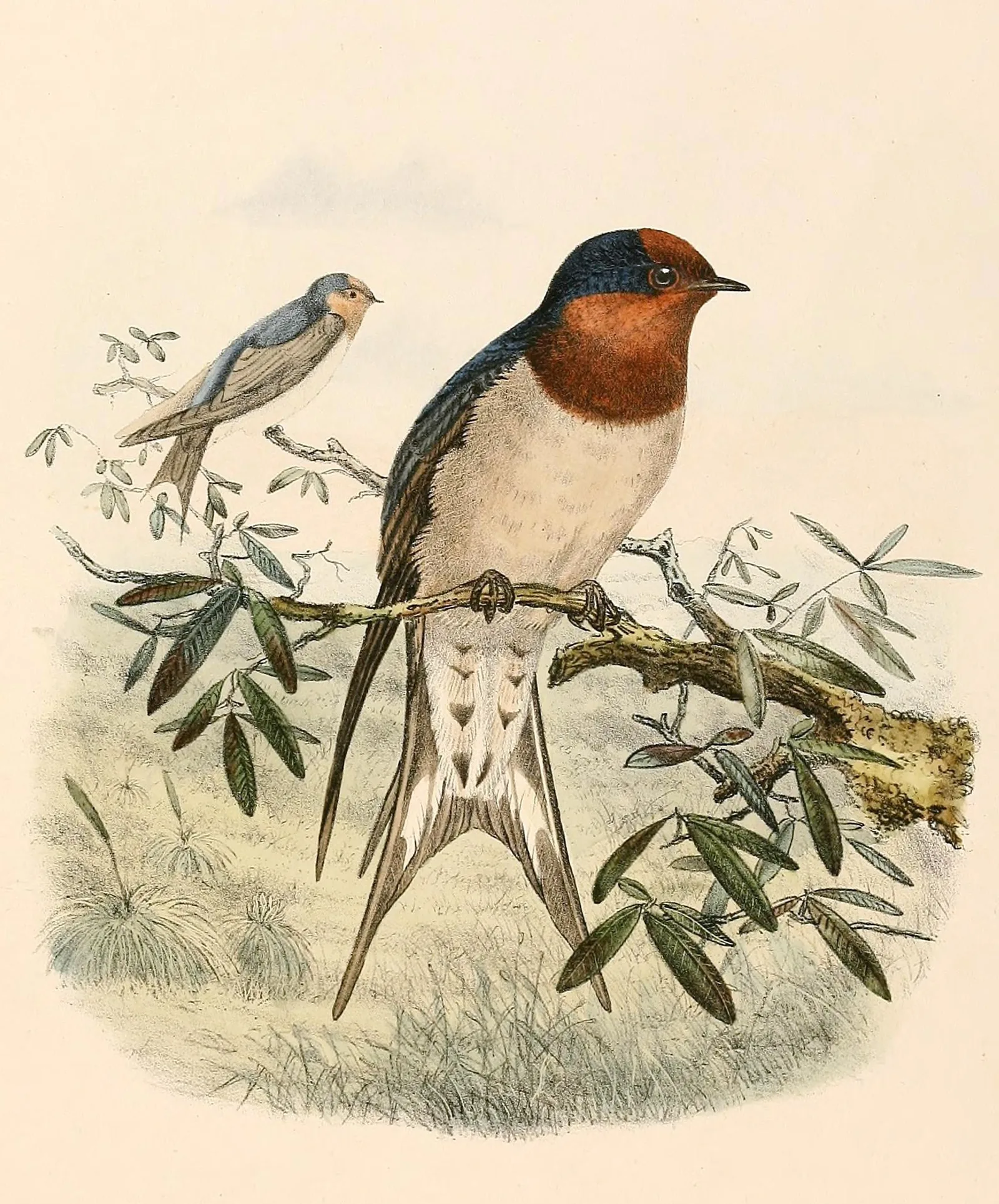
When the English naturalist John Gould (who described much of Australia’s birdlife in the 1840s) catalogued this swallow in 1842, he gave it the scientific name Hirundo neoxena. Hirundo is simply Latin for swallow. Neoxena is the interesting half. It comes from the Greek neos, meaning new, and xenos, meaning stranger or guest. The new stranger.
Out in the paddocks, though, southern Australians had already settled on a warmer name. The swallow turned up each year as one of the first signs of spring, so they called it the welcome swallow, the bird you were glad to see again. Same bird, two verdicts. The taxonomist saw a newcomer to science. The farmer saw an old friend coming back.
Mud Cups in Strange Places
The welcome swallow builds an open cup of mud and dried grass, lined with feathers and fur and fixed to almost any vertical surface near people: bridges, culverts, house eaves, sea caves, mine shafts, water tanks. It has even been found nesting inside moveable boats and ferries, which means a cup of mud and eggs can end up riding back and forth across a harbour all day. A good nest gets reused for years.
The welcome swallow feeds entirely in the air. It hunts insects in fast, looping passes low over grass and water, and it drinks without landing, scooping a billful off a pond in mid-flight. The voice is easy to miss. It is a soft, run-on twitter with a sharp little whistle of alarm, quiet enough that it does not carry far. If a welcome swallow ever wakes you, it is less an alarm than a sound you have to lean toward.
The welcome swallow never really asked permission. Science filed it under a name that means stranger. It crossed the ocean anyway and moved into our barns and boats as if it had always lived there. The least anyone can do is keep being glad to see it.
Sources:
- Wikipedia: Welcome swallow
- New Zealand Birds Online: Welcome swallow | Warou
- Friends of Queens Park Bushland: Welcome Swallow
- New Zealand Birds: Warou, the Welcome Swallow
- Wikimedia Commons: Welcome swallow, 1894 plate by Richard Bowdler Sharpe
