
The Kingbird's Hidden Crown
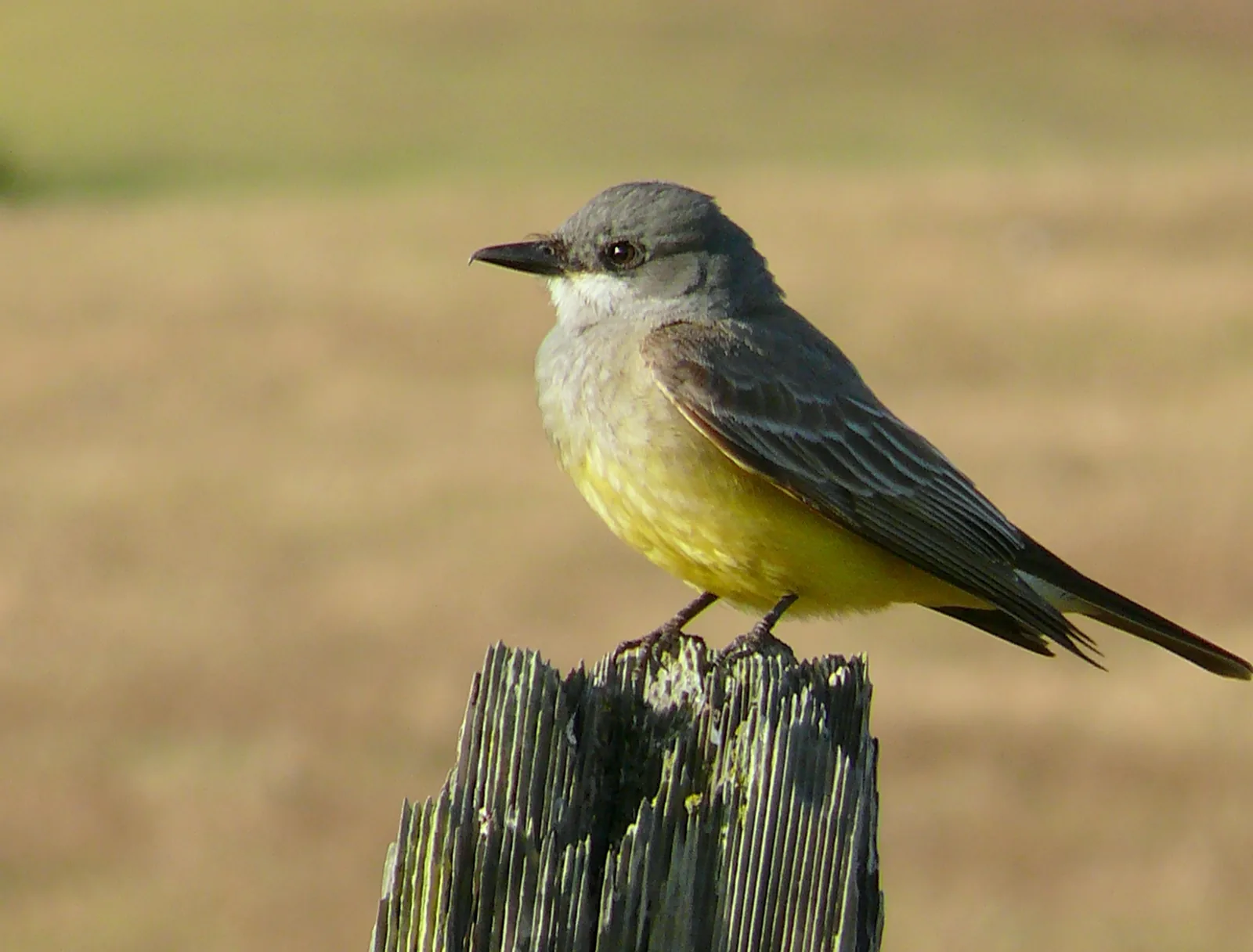
The Western Kingbird keeps its crown hidden. Under the gray feathers on its head is a patch of crimson that normally stays out of sight, until something gets too close to its nest. If you wake up in the open country of western North America in spring or summer, you may hear its sharp “kip” notes and squeaky calls coming from a fence post or power line.
Picking Fights With Hawks
The name kingbird comes from this take-charge behavior. Western Kingbirds chase off Red-tailed Hawks and American Kestrels, both larger than they are, with a harsh buzzing call, a snapping bill and that raised red crown. Males and females both join in.
As the breeding season goes on, a pair defends less and less ground. By the middle of incubation, the territory is mostly the nest tree itself, and they guard it fiercely against other kingbirds.
Following the Poles
This bird was first known as the Arkansas Kingbird. Its name was later changed to reflect a range that covers much of western North America.
That range has grown since the late 1800s, largely by accident. People planted trees on the prairies of the Dakotas and put up utility poles across Texas, which gave kingbirds places to perch and nest. Today they also nest on windmills, antennas and metal girders. Some wander far in the fall, reaching the East Coast every autumn, and they have spent winters in Florida since 1915.
Two Mothers, One Nest
One of the strangest kingbird stories comes from the state that gave this bird its old name. In Bald Knob, Arkansas, a nest sat in the steel structure of an electrical substation, about 15 feet up. In 2021 and again in 2022, two females shared it. One was a Western Kingbird. The other was a hybrid between a Western Kingbird and a Scissor-tailed Flycatcher, and the two were not related.
Researchers reported the case in 2025 in the journal Ecology and Evolution. Both females sat on the nest together, and in 2021 one was even seen sitting on the other’s back. They showed no aggression toward each other, and both fed the young along with a male. Four chicks left the nest each year.
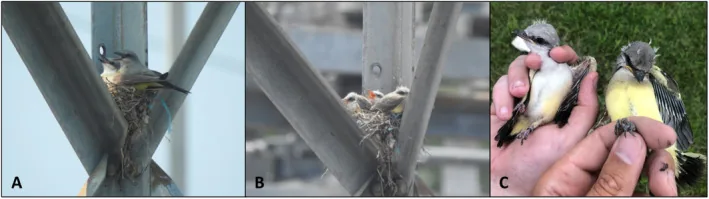
DNA from two of the 2021 chicks showed that each female was the mother of one, and that at least two fathers were involved. The authors describe this as the first reported nest sharing involving a hybrid, and the first in the tyrant flycatcher family that includes kingbirds. By 2023, the Western Kingbird female was nesting elsewhere at the substation, and the hybrid could not be found.
So this fierce bird will take on a hawk, but in one Arkansas substation it also made room for a neighbor.
Sources:
- Cornell Lab of Ornithology: Western Kingbird overview, All About Birds
- Cornell Lab of Ornithology: Western Kingbird life history, All About Birds
- Ecology and Evolution (via PubMed Central): Worm et al. (2025), Repeated Successful Nest Sharing and Cooperation Between Western Kingbirds and a Female Western Kingbird × Scissor-Tailed Flycatcher Hybrid
- Wikipedia: Western kingbird