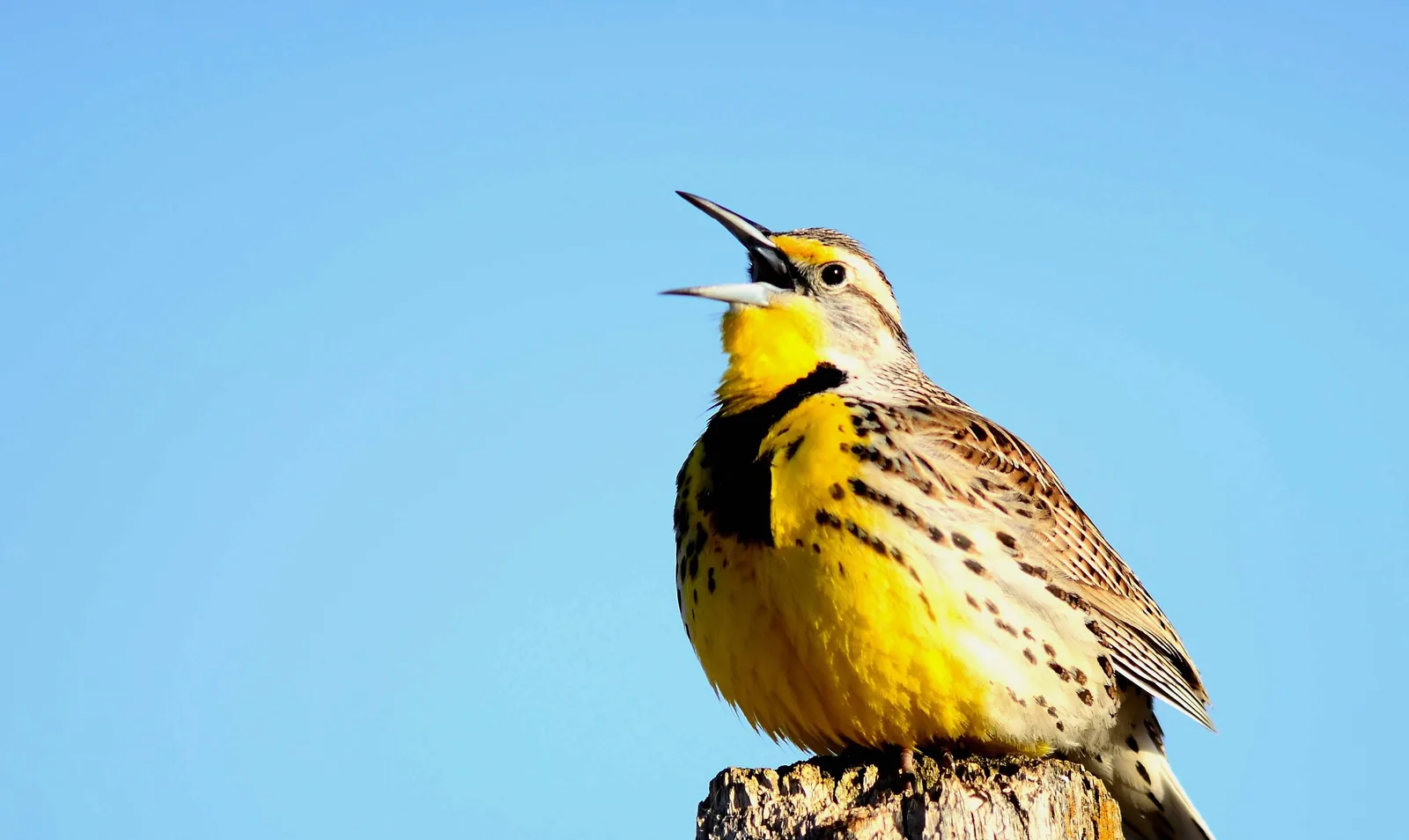

The Song on the Fence Post
The Western Meadowlark is usually heard before it is seen. A male sings from the top of a fence post, showing off a bright yellow breast crossed by a black V. If you wake up near grassland, pasture or open fields in the American West or Midwest, a bubbling, flutelike song carrying across the grass may be this bird.
A Bill That Pries
Meadowlarks feed on the ground, and they have a special trick. Like other members of the blackbird family, they have unusually strong muscles for opening the bill. A meadowlark pushes its closed bill into the soil, then forces it open to make a hole. This behavior, called gaping, lets it reach insects and seeds that most birds cannot.
What it eats changes with the seasons. In winter and early spring it eats mostly grain, and in fall mostly weed seeds. In late spring and summer it probes the soil and pokes under dirt clods for beetles, grasshoppers, crickets and cutworms.
A Nest With a Roof
The female builds the nest alone, on the ground. She often starts with a small dip, such as a cow’s hoofprint, and shapes it into a cup lined with dry grass. Many nests get a woven grass roof, and some even have an entrance tunnel several feet long. As the parents come and go, they wear short runways through the grass around it.
Meadowlarks are very sensitive while nesting, and a female disturbed while sitting on her eggs may abandon the nest.
Jumps, Chases and Two Mates
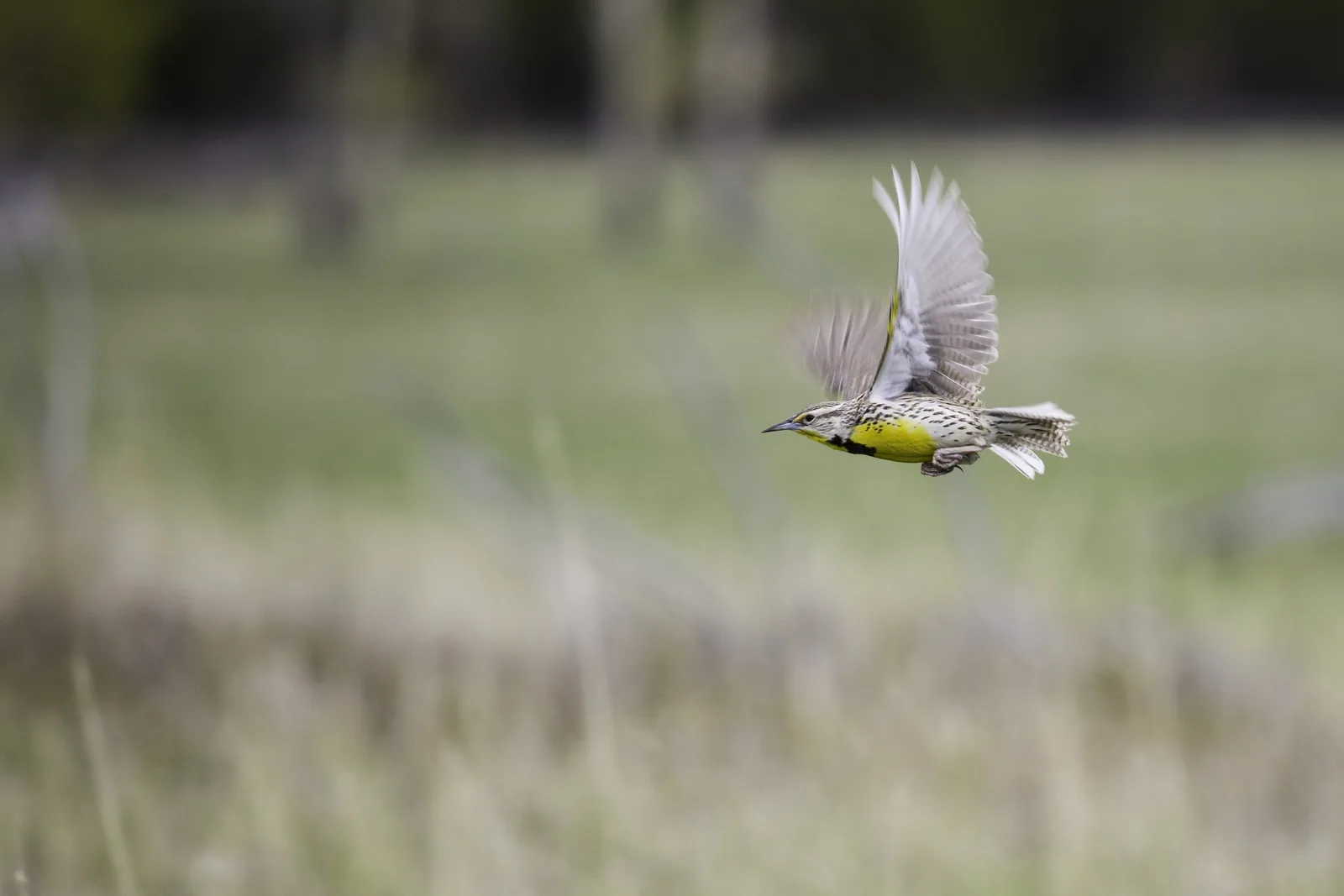
Males arrive first and can spend up to a month claiming a territory before the females come. Rivals chase each other in flights that can last up to 3 minutes. At a boundary, a male may spring straight up several feet into the air, fluttering his wings with his legs hanging below. A successful male usually has two mates at once.
The Western Meadowlark looks almost identical to the Eastern Meadowlark, but the two sing very different songs and only rarely pair up. When they do, the hybrids are fertile but produce few eggs that hatch.
A Common Bird in Decline
It is the state bird of six states, more than any bird except the Northern Cardinal. Even so, its numbers fell by about 37% from 1966 to 2019. A 2013 study of grassland birds in the United States found that the risk from insecticides was a better predictor of their declines than simply how much land was farmed.
So the song on the fence post is worth listening for while it is still easy to find.
Sources:
- Cornell Lab of Ornithology: Western Meadowlark overview, All About Birds
- Cornell Lab of Ornithology: Western Meadowlark life history, All About Birds
- PLOS ONE (via PubMed Central): Mineau and Whiteside (2013), Pesticide acute toxicity is a better correlate of U.S. grassland bird declines than agricultural intensification