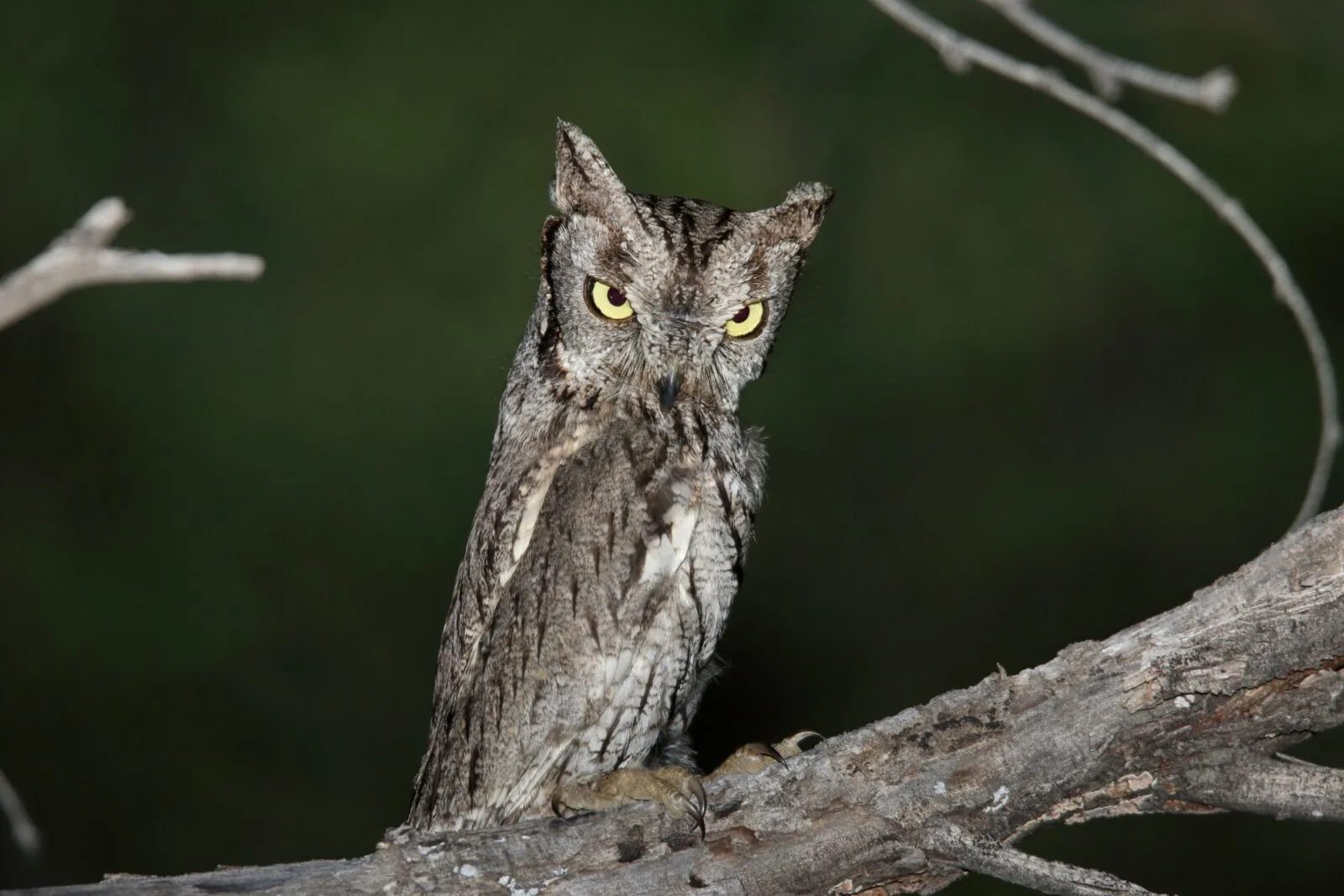
The Bouncing Ball of the Western Night
The Western Screech-Owl has a bit of an identity crisis. Despite its name, you’ll rarely hear it actually “screech.” If you’re wandering through the river corridors or oak woodlands of the American West at night, you’re far more likely to hear a series of hollow, rhythmic toots. This call accelerates in tempo, mimicking the sound of a ping-pong ball dropped onto a table until it settles into a quick roll.
It is a surprisingly endearing sound for a predator that is roughly the size of a standard pair of binoculars.
A Grand Name for a Pint-Sized Predator
The bird’s scientific name, Megascops kennicottii, is a delightful mix of linguistic irony and historical tragedy.
- The Genus: Megascops combines the Ancient Greek mégas (large) and skōps (a small, eared owl). Taxonomists essentially labeled it a “large small owl,” likely to distinguish it from even tinier relatives in the Old World.
- The Epithet: The name honors Robert Kennicott, a 19th-century naturalist and a founder of the Chicago Academy of Sciences. Kennicott’s passion for specimen collection was his undoing; he suffered a fatal heart attack at just thirty years old while exploring the rugged banks of the Yukon River.
Nature’s Most Unlikely Roommate
Beyond its oxymoronic name, this owl practices a “housekeeping” strategy that sounds like the plot of a surreal children’s book. While most famous in its Eastern cousin, the Western Screech-Owl is known to occasionally bring live blind snakes back to its nest.
Instead of treating the worm-like reptiles as a snack, the owls allow them to burrow into the nest debris. These snakes act as an organic custodial crew, eating the larvae of flesh-eating flies and other parasites that would otherwise harm the owlets.
The Result: Research indicates that chicks in nests with “live-in housekeepers” grow faster and have a significantly higher survival rate. In the West, where the Western Blind Snake overlaps with the owl’s territory, this bizarre partnership is a masterclass in tactical biology.
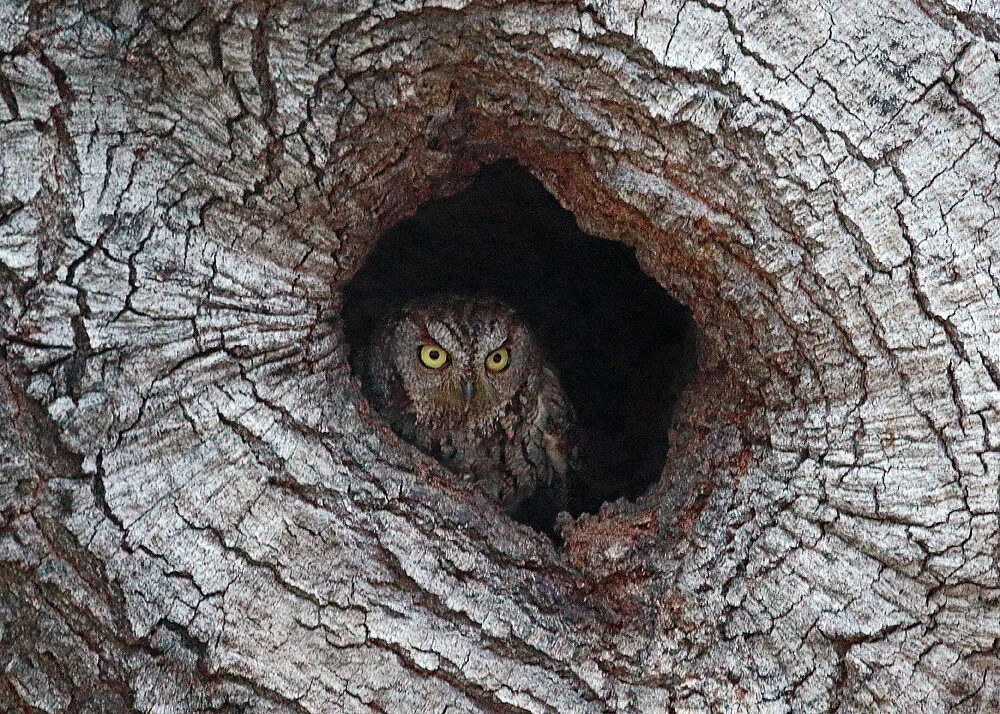
The Search for the “Ku” Bird
The owl’s distinctive “bouncing ball” trill has woven itself into the folklore of the West.
- Yaqui Folklore: Legend tells of the owl convincing every bird in the forest to donate a single feather to the featherless Ku Bird, making it the most beautiful creature alive. When the Ku Bird vanished with its borrowed finery, the owl was left to spend every night calling “Ku, Ku, Ku” in an eternal, desperate search.
- Navajo (Diné) Tradition: Known as Néʼéshjaaʼ, the owl occupies a more solemn role. It is respected as a messenger of transition and a powerful harbinger of future events.
The Western Screech-Owl is a master of camouflage, often pressing its body against tree bark to vanish in plain sight during the day. Whether thriving on a suburban golf course or a remote desert wash, its presence reminds us that nature is a web of complex, often bizarre partnerships.
Sources
- All About Birds:Western Screech-Owl Overview
- The Peregrine Fund:Western Screech-Owl Species Profile
- Liberty Wildlife:Western Screech-Owl (Mars)
- BirdNote:Blind Snakes and Screech-Owls
- University of Arizona:Backyards & Beyond - Western Screech-Owl