_Taveuni.jpg)
Neither Blue, Nor a Crane
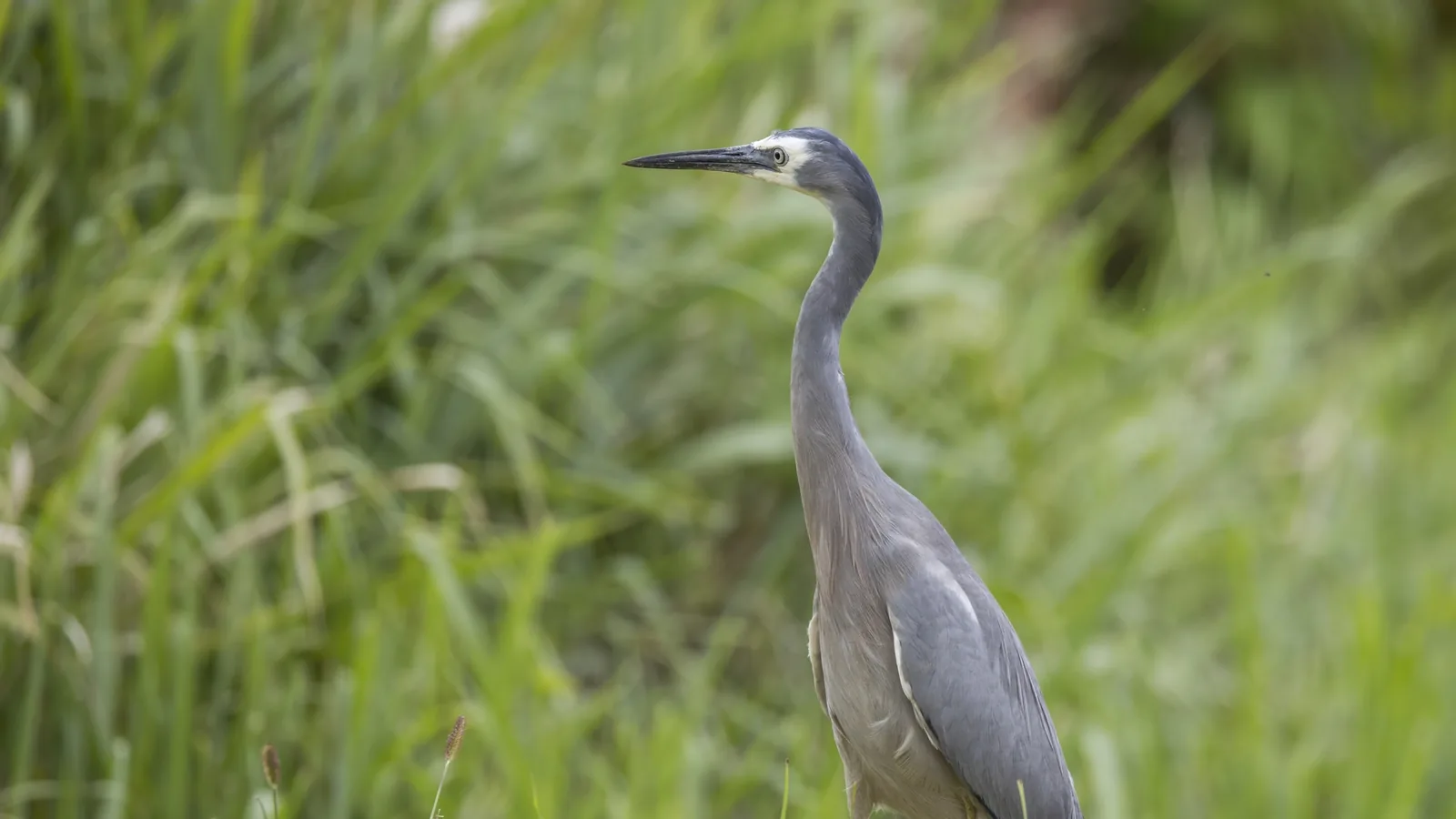
If you live almost anywhere in Australia or New Zealand, you have probably met this bird and called it the wrong thing. Across Australia, plenty of people know it as the “blue crane.” It is not blue, and it is certainly not a crane. It is a heron, and a stranger one than its calm grey feathers let on.
The Bird Everyone Names Wrong
Its scientific name is Egretta novaehollandiae. That second word means “of New Holland,” the old European name for Australia, and it was pinned on the bird by John Latham, the English naturalist who first catalogued it in 1790. Egretta comes from aigrette, the French word for the wispy plumes that herons and egrets grow to show off in the breeding season. The name fits. Come spring, this one sprouts pinkish-bronze plumes across its breast and soft blue-grey ones down its back. The “white face” of its English name is really just the forehead, chin and throat. The Ngarrindjeri people of South Australia’s lower Murray knew it as krawli. In New Zealand, the Māori call it matuku moana, the heron of the sea.
Forget the Patient Statue
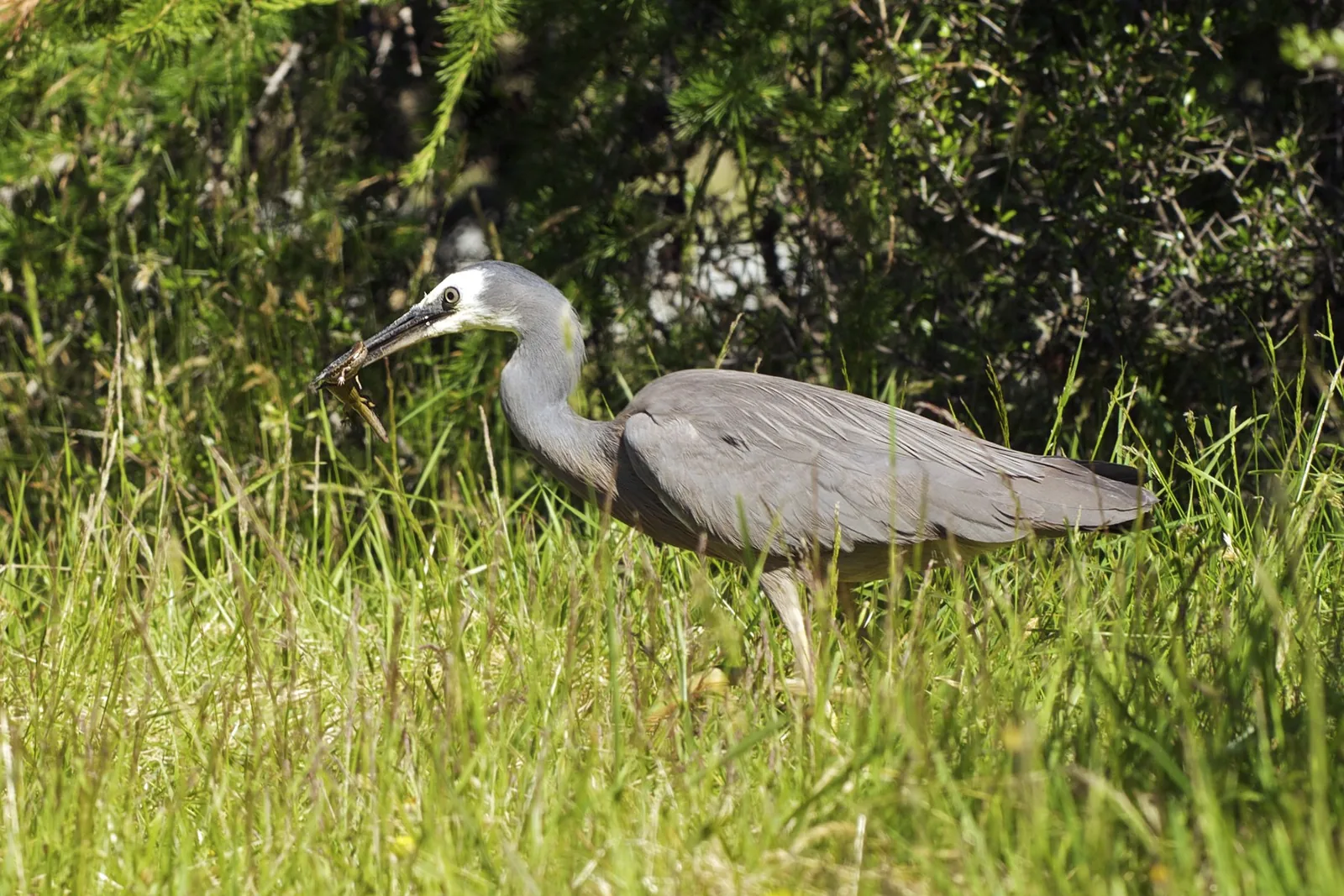
We tend to picture herons as statues, frozen at the water’s edge, waiting for a fish to drift within range. The white-faced heron can do that. It would just rather not. Watch one work a mudflat and you may catch it raking the bottom with one foot, stirring up whatever is hiding in the silt. Other times it flicks a wing open, throwing out a flash of grey to spook prey into breaking cover. When patience fails completely, it abandons all dignity and chases a frog through the shallows with both wings spread wide. It will eat almost anything it can grab: fish, frogs, lizards, crabs, insects, even the odd mouse. If pickings are thin in the wild, a garden does just as well. More than one Australian has stepped outside to find a prize goldfish gone and a tall grey bird standing nearby, looking entirely innocent.
The Heron That Moved to New Zealand
Here is the part that catches even keen birders off guard. The white-faced heron is barely a New Zealander at all. It was a rare visitor until the 1940s, when birds began crossing the Tasman Sea and staying put. From the 1950s on, the numbers climbed fast, and today it is the most common heron in the whole country, turning up everywhere from suburban drains to the far-off Chatham Islands. Nobody released it. It arrived under its own slow, bouncing wingbeats and made itself at home. Do not expect a lovely song to go with it. The usual call is a harsh, gravelly croak, often thrown back over its shoulder as it flaps away. Birders write it down as graaw.
So the next time someone points at a tall grey wader and calls it a “blue crane,” you can let it slide. Or you can tell them the truth. This is a heron that fools people about its name and quietly colonised an entire country without asking. Calm grey feathers, restless life underneath.
Sources:
- Wikipedia: White-faced heron
- New Zealand Birds Online: White-faced heron | Matuku moana
- BirdLife Australia: White-faced Heron
- Oiseaux-Birds: White-faced Heron (Egretta novaehollandiae)
- Xeno-canto: White-faced Heron call recordings
- Te Aka Māori Dictionary: matuku moana