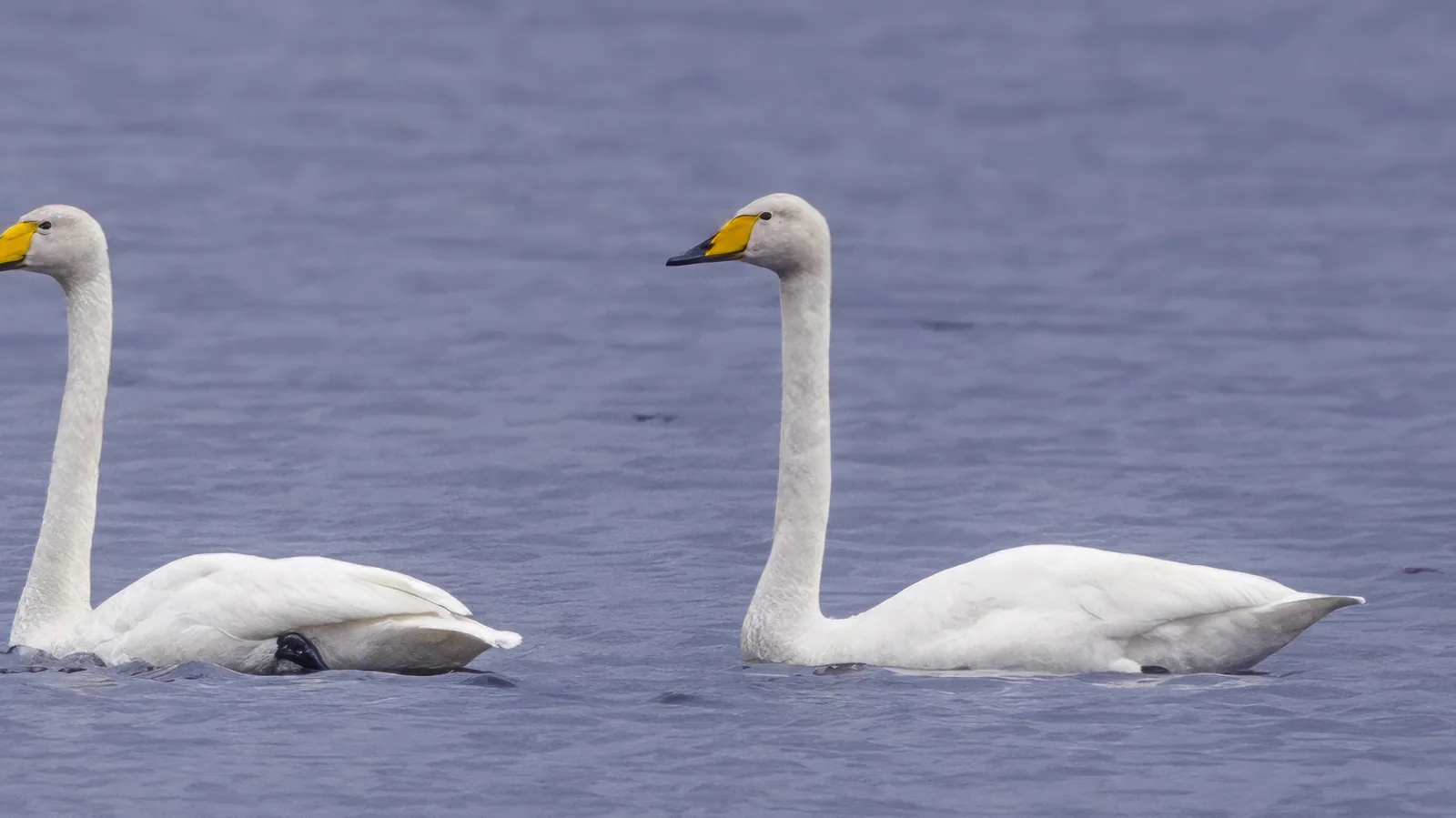
_pair_Oppdal.jpg)
The Singing Swan of Tuonela
In Finland’s national epic the Kalevala, a sacred swan glides on the black river of Tuonela, the realm of the dead. The hero Lemminkäinen is sent to kill it; a poisoned arrow drops him on the way. Jean Sibelius, the Finnish composer, wrote a tone poem about that swan in 1895, with a cor anglais playing its voice. The bird itself is Cygnus cygnus, the Whooper Swan, and the Finns call it laulujoutsen: the singing swan.
A Latin Name Made of Swan
Linnaeus, the Swedish father of modern taxonomy, described the species in 1758. Once it moved into its own genus, the binomial settled at Cygnus cygnus: both halves come from the same word. The Latin cygnus descends from the Ancient Greek κύκνος, which already meant swan. So the name reads, plainly, “swan, swan.” “Whooper” comes from the call, a deep, trumpet-like kloo-kloo-kloo that carries across long distances. The much commoner Mute Swan keeps an almost monastic silence by comparison, which is why nineteenth-century naturalists called this one Cygnus musicus, the musical swan. The Finnish laulujoutsen is built from laulu (song) and joutsen (swan), and means the same thing.
Sibelius and the River of the Dead
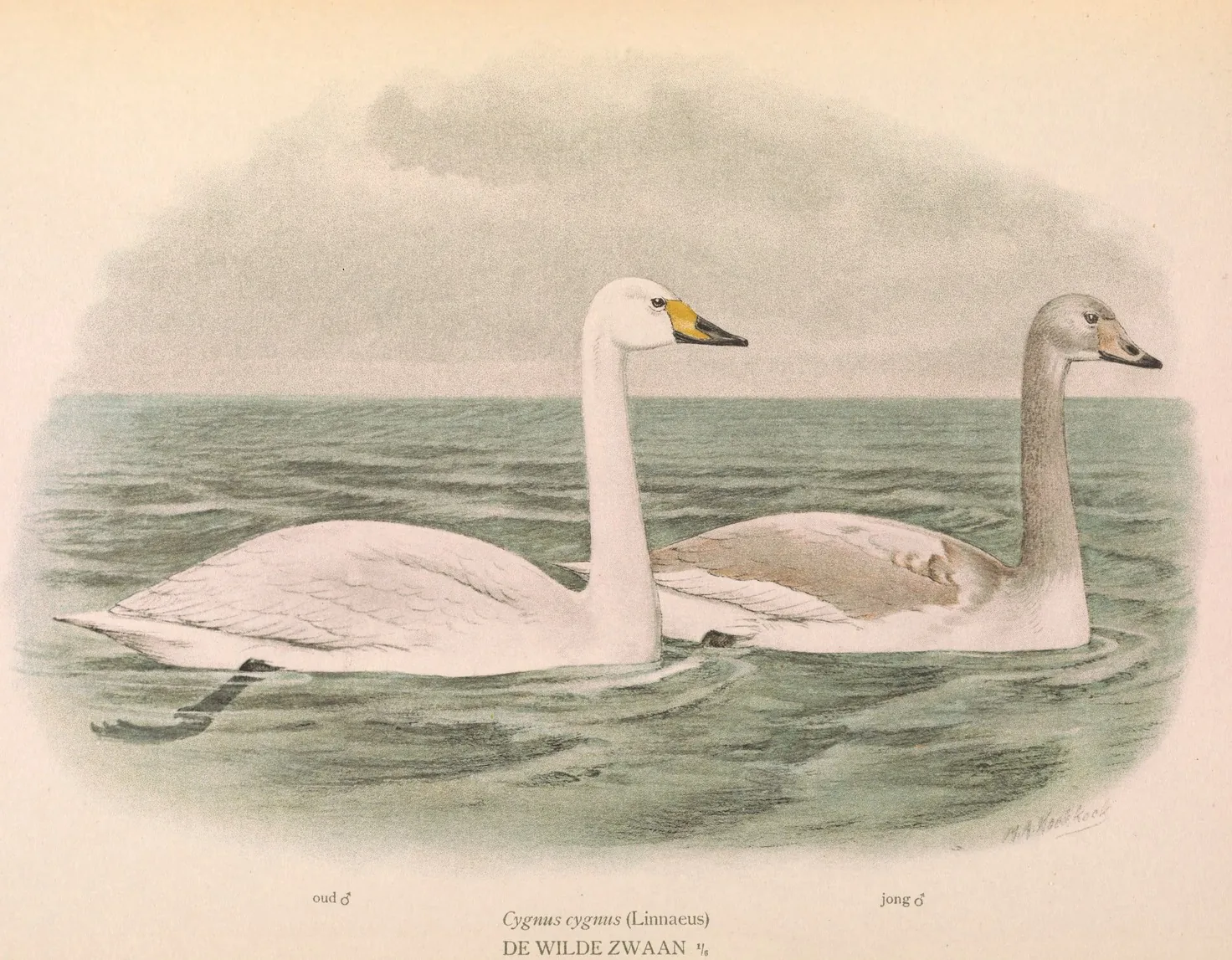
The Lemminkäinen Suite (Op. 22, 1893 to 1895) takes its name from the Kalevala hero. The second movement, The Swan of Tuonela, gives the bird’s voice to a solo cor anglais over hushed strings, low and unhurried. By the early twentieth century, the swan that inspired the music had almost gone. Hunting and egg collecting drove Finland’s breeding population down to about fifteen pairs by the 1940s, restricted to the northernmost edge of Lapland. Legal protection in 1934 turned it around. In 1981, after a public vote, Cygnus cygnus was named Finland’s national bird. It is on Finland’s 1-euro coin.
Eight Kilometres Above the Foyle
The migration is the other thing the music does not tell you. Iceland-breeding Whoopers winter in Britain and Ireland, crossing the North Atlantic in family groups and calling to each other in flight. On 9 December 1967, a pilot reported a flock of around thirty Whooper Swans flying south over Lough Foyle, on the Northern Irish coast. Air traffic control radar confirmed the altitude: just over 8,200 metres, or about 27,000 feet, well into commercial-aviation airspace. It remains one of the highest verified sightings of any bird in level flight.
The bird Sibelius wrote into music turns out to fly higher than the music suggests. Laulujoutsen crosses the North Atlantic at cruising altitude, calling the whole way down. It pairs for life on the bog where it lands.
Sources:
- Wikipedia: Whooper swan
- Wikipedia: The Swan of Tuonela
- Arctic Centre, University of Lapland: Whooper Swan
- thisisFINLAND: Iconic Finnish nature symbols stand out
- RSPB: Whooper Swan facts
- Wikipedia: List of birds by flight heights
- Wiktionary: cygnus etymology
- BirdWatch Ireland: Whooper Swan
- Wikimedia Commons: Koekkoek, Ornithologia Neerlandica vol. 1, Plate 38 (1922)
- YouTube, Wildlife World: Whooper Swan bird dance and call
