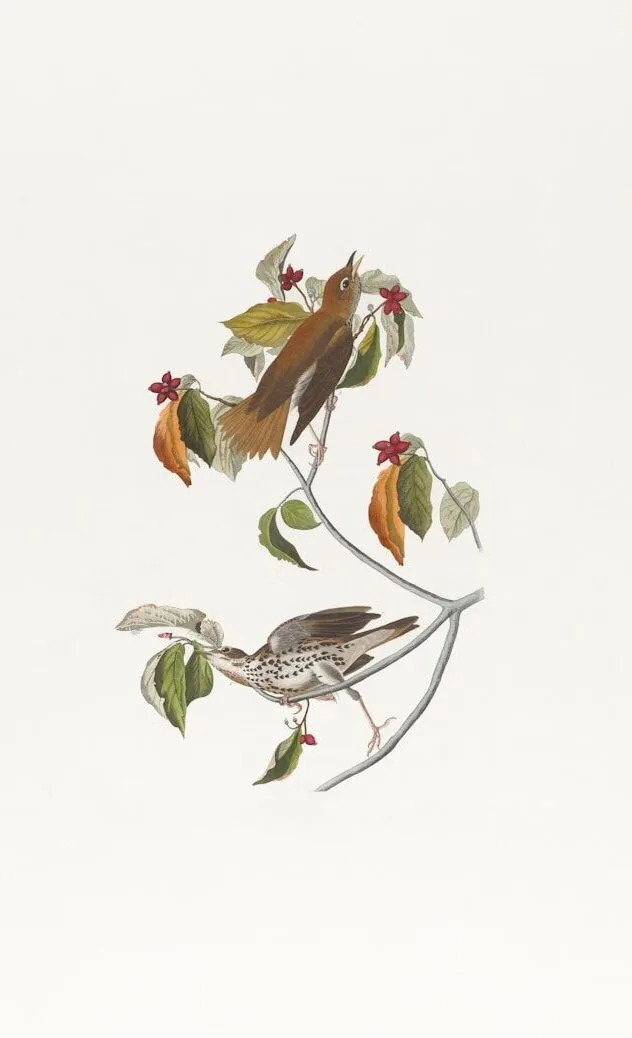
The Wood Thrush produces a unique, polyphonic “ee-oh-lay” call by using its Y-shaped syrinx to generate two distinct, simultaneous notes. This internal duet capability allows the male to harmonize with himself, a notable contrast to the single-note melodies of many other songbirds.
The Weasel in the Shadows
The bird’s scientific name is a study in literalism. Hylocichla blends the Greek hyle (woodland) and cichle (thrush), while mustelina is derived from the Latin mustela, or “weasel.” This is a direct reference to the rich, cinnamon-red plumage on its crown and back, which mirrors the warm tones of a mustelid’s fur. Whether navigating a moist Appalachian ravine or a Costa Rican lowland in winter, this “weasel” can be seen hopping through leaf litter with an upright, almost regal posture.
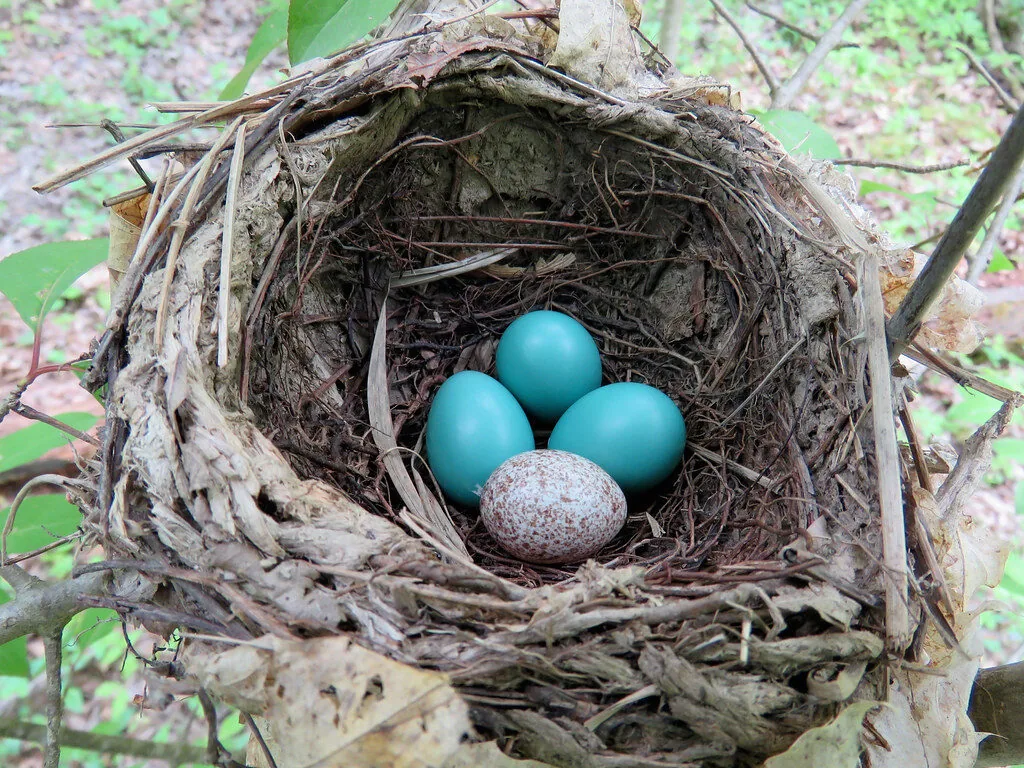
This ground-dwelling lifestyle, however, masks a specific dietary crisis. Female Wood Thrushes require roughly ten to fifteen times more calcium than a mammal of similar size to produce their signature turquoise-green eggs. This makes land snails a non-negotiable dietary requirement. In regions where acid rain has leached calcium from the soil, snail populations vanish—and the “Swamp Angel,” as folk history calls it, begins to fall silent.
White Flags and Spirit Worlds
Their nesting habits are equally peculiar and tactical. Wood Thrushes frequently weave “white materials”—bits of paper, plastic, or bleached cloth—into the exterior of their mud-lined nests. While it seems counterintuitive to use bright white in a dark forest, it serves as disruptive camouflage. These white patches break up the nest’s round silhouette, mimicking dappled sunlight or random debris to deceive visual predators like crows and jays.
This bird has long exerted a powerful pull on the human imagination. Henry David Thoreau famously dubbed it “a Shakespeare among birds,” claiming its song served as a “medicative draught” for the soul. Similarly, in the Teton Dakota Sioux language, the phrase Čáŋǧuǧúya šá s’e íwašičuŋlah compares a talkative person to the Wood Thrush, acknowledging the bird’s tireless ability to fill the canopy with complex, eloquent sentences.
A Sentinel of the Hemisphere
The Wood Thrush remains a vital sentinel of forest health. It connects the hemisphere through a 2,200-kilometer migration, often crossing the Gulf of Mexico in a single, non-stop burst of flight. To hear its song is to witness an ancient, mathematically grounded resonance—the “Logos made audible”—that persists only as long as we protect the large, intact forest tracts it requires to survive.