The Rainbird in the Funeral Suit
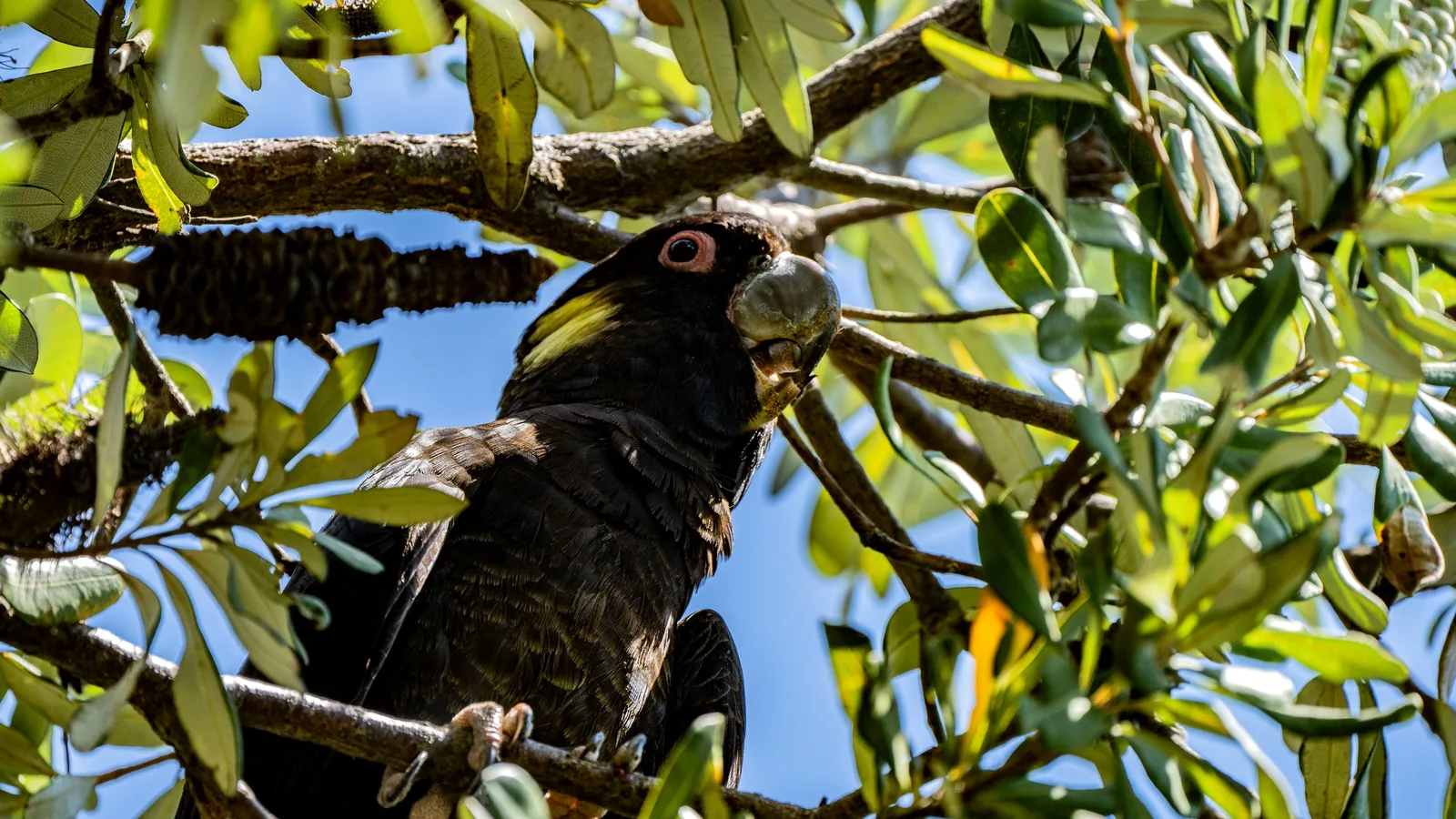
If you wake up somewhere in southeastern Australia to a long, wailing kee-ow over the treetops, look up. That is a big black parrot, well over half a metre from bill to tail, dressed in sooty black. The Yellow-tailed Black Cockatoo wears the darkest suit in the forest, relieved only by a smudge of yellow on the cheek and a panel of pale yellow in the tail. Its scientific name is Zanda funerea, and the funerea part is Latin for funereal. Early naturalists took one look and decided it was dressed for a funeral.
Dressed for a Funeral
The species was named in 1794 by George Shaw, an English naturalist, who gave it the mournful label it still carries. For most of two centuries it sat in the genus Calyptorhynchus, until genetic work moved it into a genus of its own, Zanda. John Gould, the English artist who painted Australia’s birds in the 1840s, went further and called it the Funereal Cockatoo, noting it was the largest of its kind. In the Hunter region of New South Wales, one Aboriginal name for it was wylah. Against a grey sky, it can look like a mourner passing through the canopy.
Chiselling for Grubs
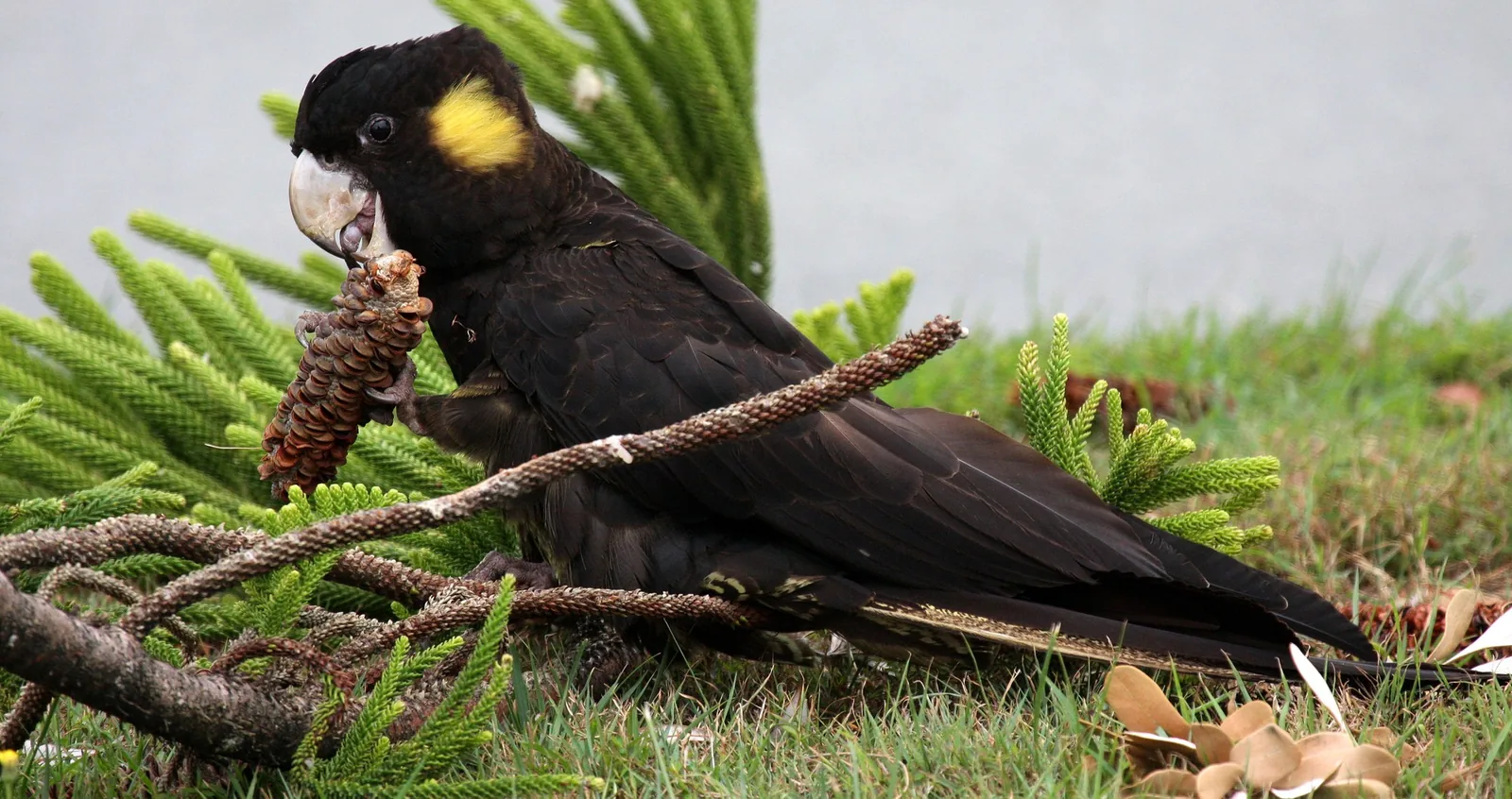
Watch one feed and the funeral manners vanish. The Yellow-tailed Black Cockatoo is a working demolition crew. It hunts the fat larvae of wood-boring beetles and cossid moths that tunnel deep into living wood, and it goes in after them like a carpenter. Bracing against the trunk and using its stiff tail for balance, the bird makes exploratory bites along the bark, feeling for a grub below. When it finds one, it peels off a strip of bark for a foothold, then gouges through the hardwood with a bill strong enough to work open a pine cone in about twenty minutes. The hunt peaks in June and July, when the caterpillars are largest and the newly fledged young trail along to learn the trade.
The Bird That Calls the Rain
The wailing call carries far over the treetops, and across New South Wales people read it as a forecast. On the Hunter coast and up in the mountains, the old saying runs the same way: when the black cockatoos fly over calling, rain is on the way. There is even a folk explanation. Before rain the wood in the trees softens with the rising damp, the grubs sit easier to reach, and the birds move around and call more than usual. Whether or not the birds really do sense the rain, there is an irony in it. Shaw named the bird for mourning, and funereus even carries the sense of “boding ill,” yet on a dry continent its message is the best news there is.
For all the funeral imagery, these are long-lived, sociable birds. One captive pair was still preening each other into their late thirties and forties. So that wailing kee-ow overhead is less a dirge than a weather report, from a bird that has been reading the sky far longer than any barometer.
Sources:
- Wikipedia: Yellow-tailed black cockatoo
- Australian Museum: Yellow-tailed Black-Cockatoo
- Wiktionary: funereus (Latin: “funereal; boding ill”)
- Project Gutenberg: The Birds of Australia, Vol. V (John Gould, 1848)
- The Weather Watch: Australian folk-lore weather forecasting
- Wild Ambience: Yellow-tailed Black Cockatoo calls