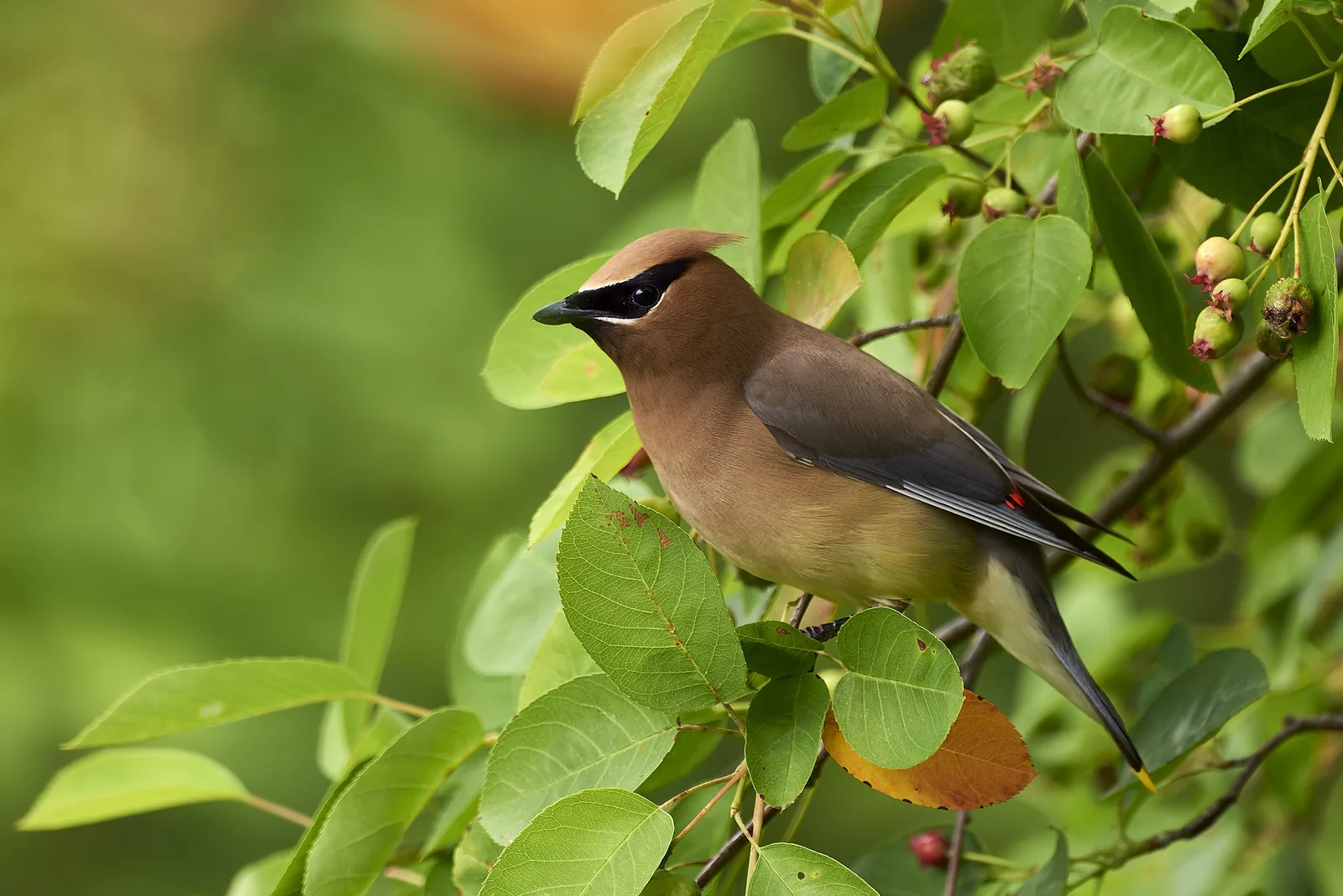

The Bird Built for Berries
Few North American birds live the way the Cedar Waxwing does. It specializes in fruit and can survive on nothing else for several months. If you wake up near berry trees in North America, you may hear a flock before you see it, a stream of very high, thin whistles from birds that are rarely alone.
A Life Built on Berries
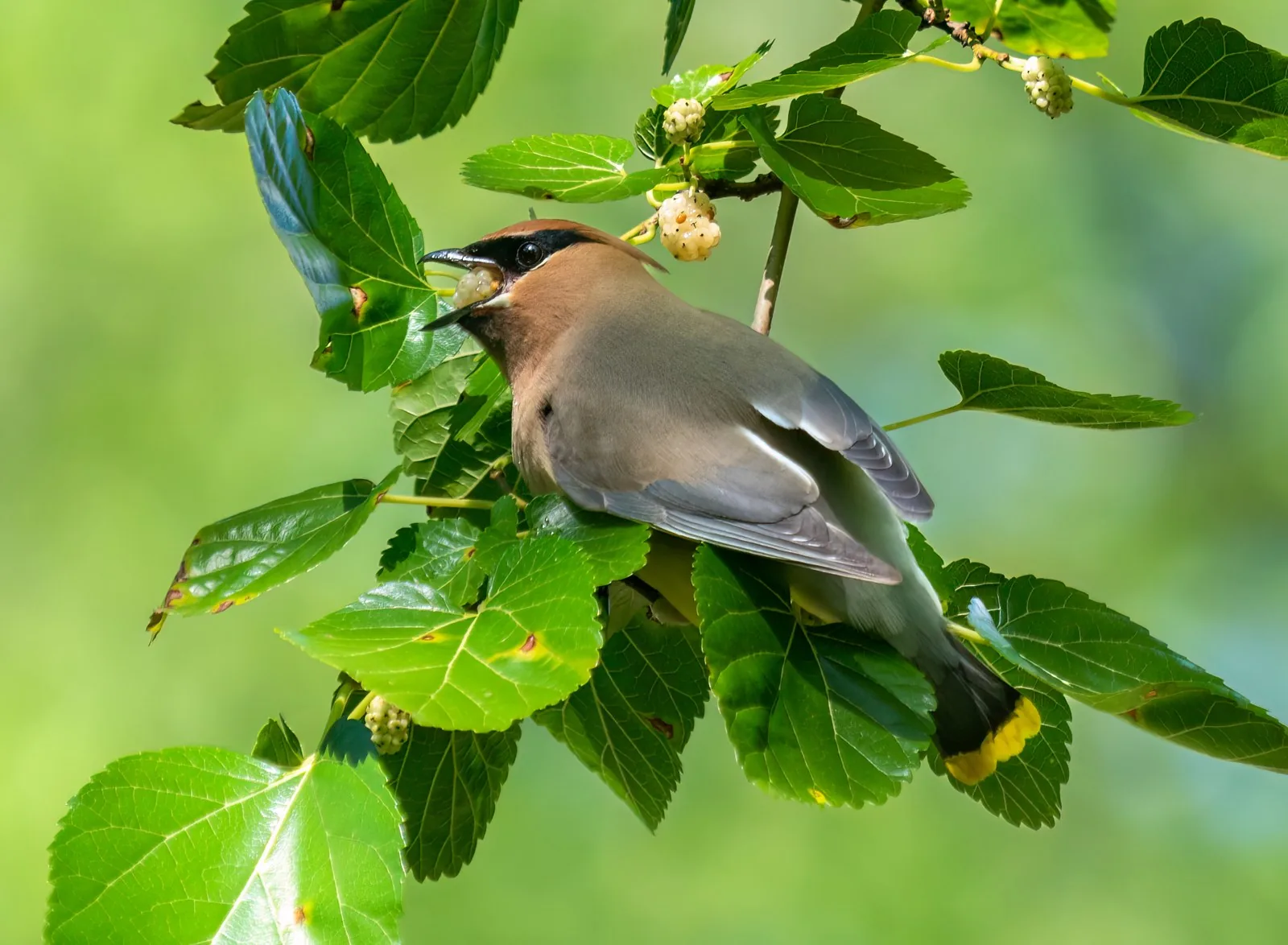
The name comes from that appetite. Cedar Waxwings are fond of the small berry-like cones of the eastern redcedar in winter, and in summer they turn to fruits like serviceberry, mulberry and dogwood. They pluck each fruit and swallow it whole. Many fruit-eating birds bring the seeds back up, but this one lets them pass right through.
Flocks can be surprisingly orderly about it. When only one bird at a time can reach a cluster of berries at the end of a twig, the flock may line up along the twig and pass berries beak to beak, so that each bird gets a chance to eat. Courting pairs do a smaller version of the same thing. They hop toward each other and pass a fruit, insect or flower petal back and forth, until the female usually eats it.
A diet like this has some odd consequences. Overripe berries can ferment, and waxwings occasionally become intoxicated or even die after eating them. It also protects them from a common nest invader. Brown-headed Cowbirds lay their eggs in other birds’ nests, but chicks raised by waxwings typically do not survive, in part because they cannot develop on so much fruit.
A Tail Dyed by a Shrub
The bird’s close relative, the Bohemian Waxwing, shares the feature behind the “waxwing” name, small red tips on some wing feathers that look like drops of sealing wax. Their purpose is still not known for certain, though they may help attract mates.
The Cedar Waxwing’s tail tells a more recent story. It normally ends in a band of yellow. In the 1960s, birds with orange tail tips began appearing in the northeastern United States and southeastern Canada. The color comes from a red pigment in the berries of an introduced honeysuckle. If a waxwing eats enough of them while it is growing a tail feather, the tip of that feather turns orange.
Moving Into Town
Planted berry trees have also drawn these birds into towns and suburbs, and their numbers remained stable from 1966 to 2019, with increases in some areas. The trees come with hazards, since waxwings can hit windows or be struck by cars while feeding along roads.
If a tree near you is heavy with fruit this winter, keep an eye on it. You might get a whole flock, and if you are lucky, a line of birds passing berries down a twig.
Sources:
- Cornell Lab of Ornithology: Cedar Waxwing overview, All About Birds
- Cornell Lab of Ornithology: Cedar Waxwing life history, All About Birds
- Wikipedia: Cedar waxwing