
The Hawk Behind the Blue Jay's Act
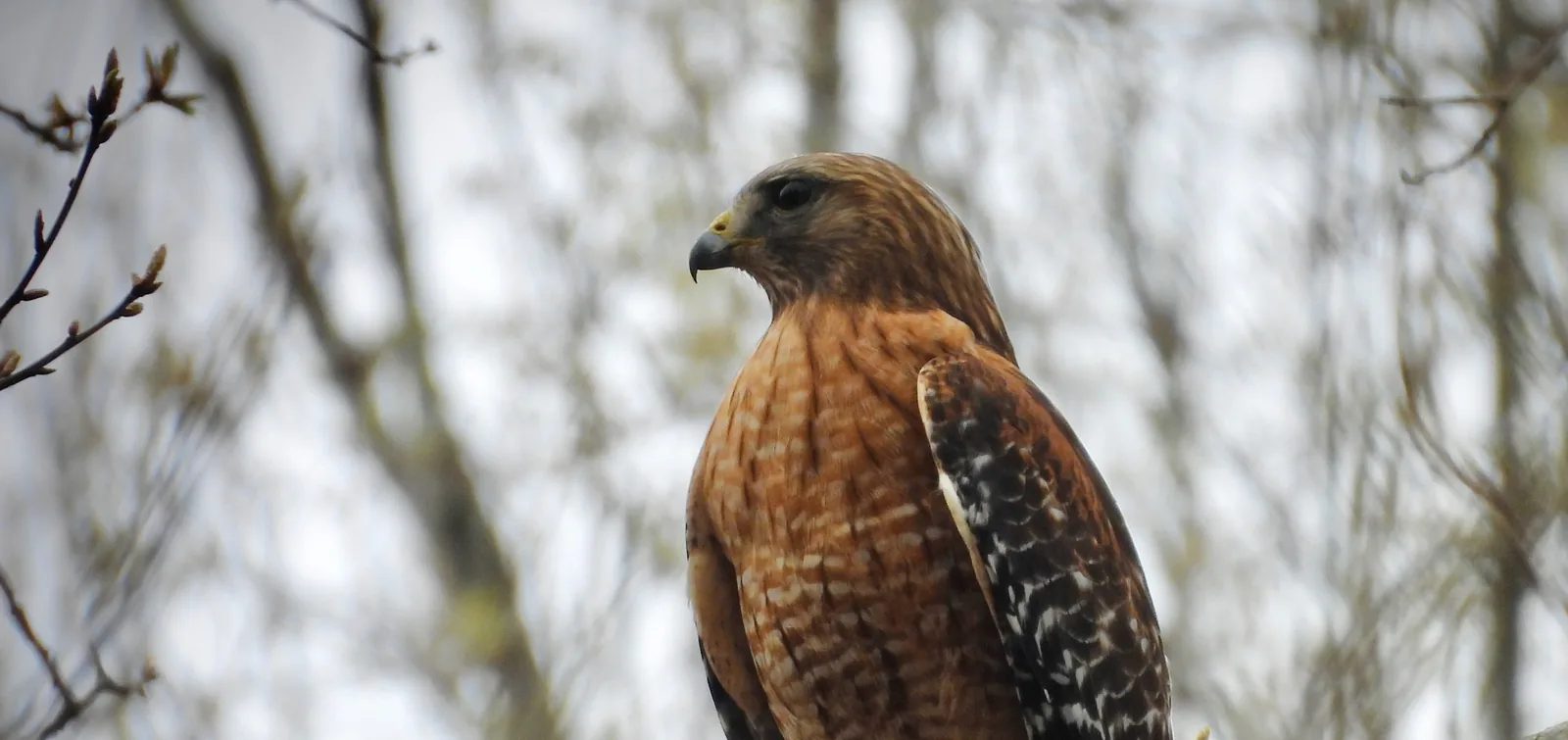
Sometimes the hawk screaming over a wooded neighborhood is not a hawk at all. The Red-shouldered Hawk has a loud, repeated whistle that other birds have learned to copy. If you wake up near wet woods in eastern North America or California, a string of sharp “kee-ah” calls may be this hawk, or a very good impression of it.
A Call Worth Copying
The best-known mimic is the Blue Jay, which often imitates hawks and especially this one. The fake call may tell other jays that a hawk is around, or it may trick other birds into thinking one is.
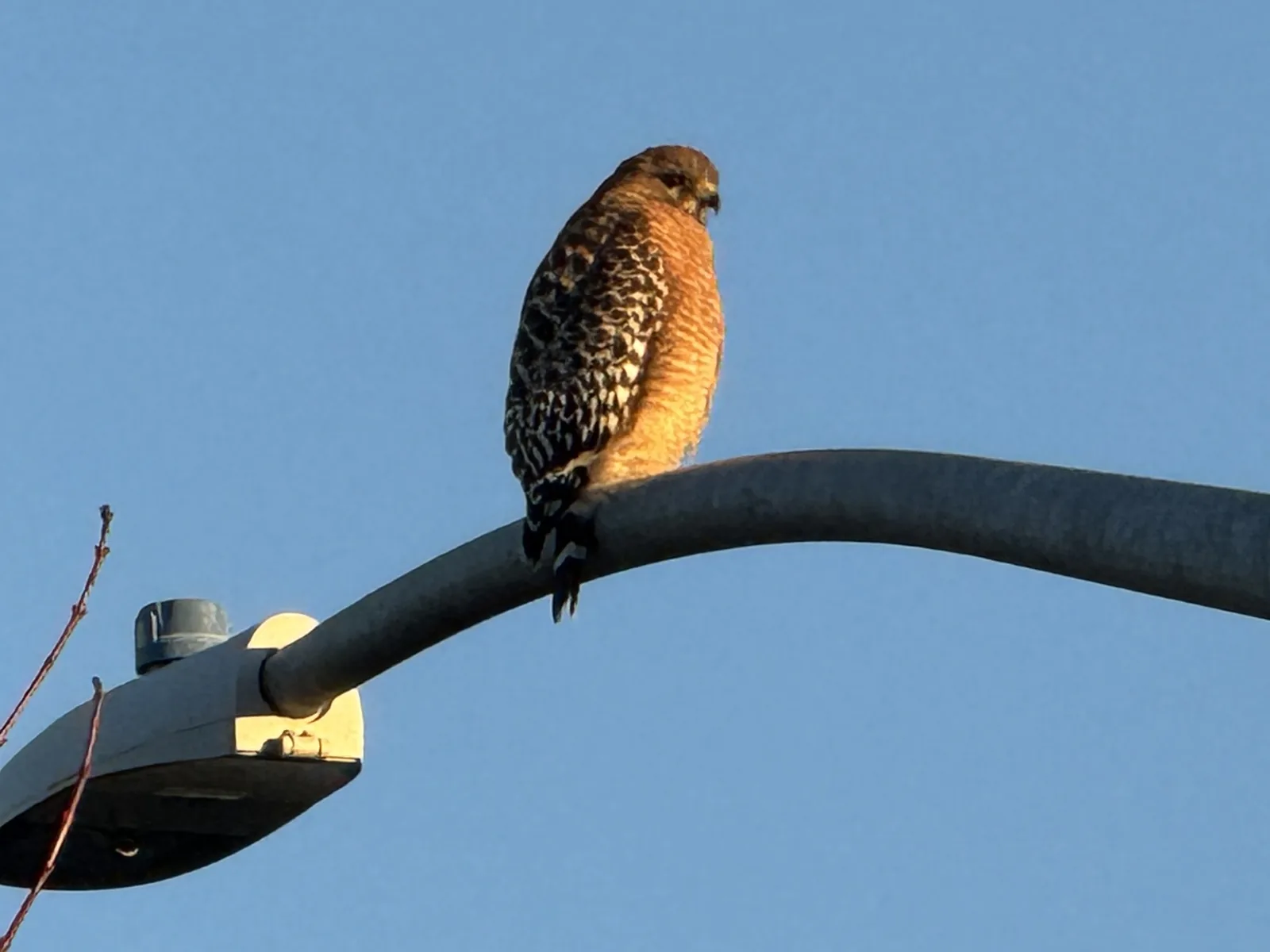
The real bird is easy to recognize up close. It has barred, reddish-peach underparts and a tail with bold black and white bands. In flight, pale crescents near the wingtips let the sun shine through.
From Swamps to Suburbs
This is a hawk of tall woods and water. It hunts from a perch along a stream or pond, waiting silently, then glides down to snatch a vole, a frog, a snake or a crayfish. It also lives in suburbs where houses are mixed into woodland, and its numbers grew by more than 2% a year across most of its range from 1966 to 2019.
Once settled, it stays put. Red-shouldered Hawks return to the same territory year after year, and one in southern California held its territory for 16 years in a row.
Living near people has changed how some of them guard their nests. In a 2024 study in Ohio, researchers walked up to nests in suburban and rural areas. Most hawks in both places barely reacted, but suburban birds defended their nests more strongly. Among the suburban hawks, the most aggressive ones tended to have lower nests.
Crows, Owls and a Sky Dance
American Crows often mob this hawk, but the two sometimes chase each other and try to steal each other’s food. They may even team up to drive a Great Horned Owl out of the hawk’s territory. The owl often takes young hawks from the nest, but once, while one hawk chased an owl away, its mate took a young owl from the owl’s nest and ate it.
In spring, the male performs a “sky dance,” soaring and calling, then diving steeply toward the female again and again before finally landing on her back.
The young have their own talent. By the time they are five days old, they can shoot their droppings over the edge of the nest, so a splattered patch of ground below is a good sign that a family is living overhead.
Sources:
- Cornell Lab of Ornithology: Red-shouldered Hawk overview, All About Birds
- Cornell Lab of Ornithology: Red-shouldered Hawk life history, All About Birds
- Cornell Lab of Ornithology: Blue Jay overview, All About Birds
- Journal of Raptor Research: Dykstra et al. (2024), Nest Defense Behavior of Suburban and Rural Red-shouldered Hawks